


From First Scratch to Full Removal: A Pest Controller’s Honest Guide to Squirrel Pest Control
You hear it at 6 in the morning. A scratching sound above your ceiling. Then scurrying. Then chewing.You brush it off and tell yourself there is nothing to worry about. Two weeks later, your electrician finds gnawed wiring in the attic and hands you a quote that makes your stomach drop.
That is the squirrel story Canadian homeowners tell us more often than you would think. These animals look completely harmless from a distance, but once they get inside your home or establish themselves in your yard, the damage they cause is anything but small. Squirrel pest control is one of the most common wildlife issues we deal with across Ontario, and it is almost always more manageable when caught early.
This guide walks you through everything: how to identify the squirrel species causing your problem, what warning signs to look for, which control and removal methods actually work, and how to keep squirrels away for good once they are gone.
Know What You Are Up Against: Squirrel Identification in Canada
Before you treat any pest problem, you need to know exactly what you are dealing with. Canada is home to several squirrel species, and identifying the right one shapes your entire control approach.
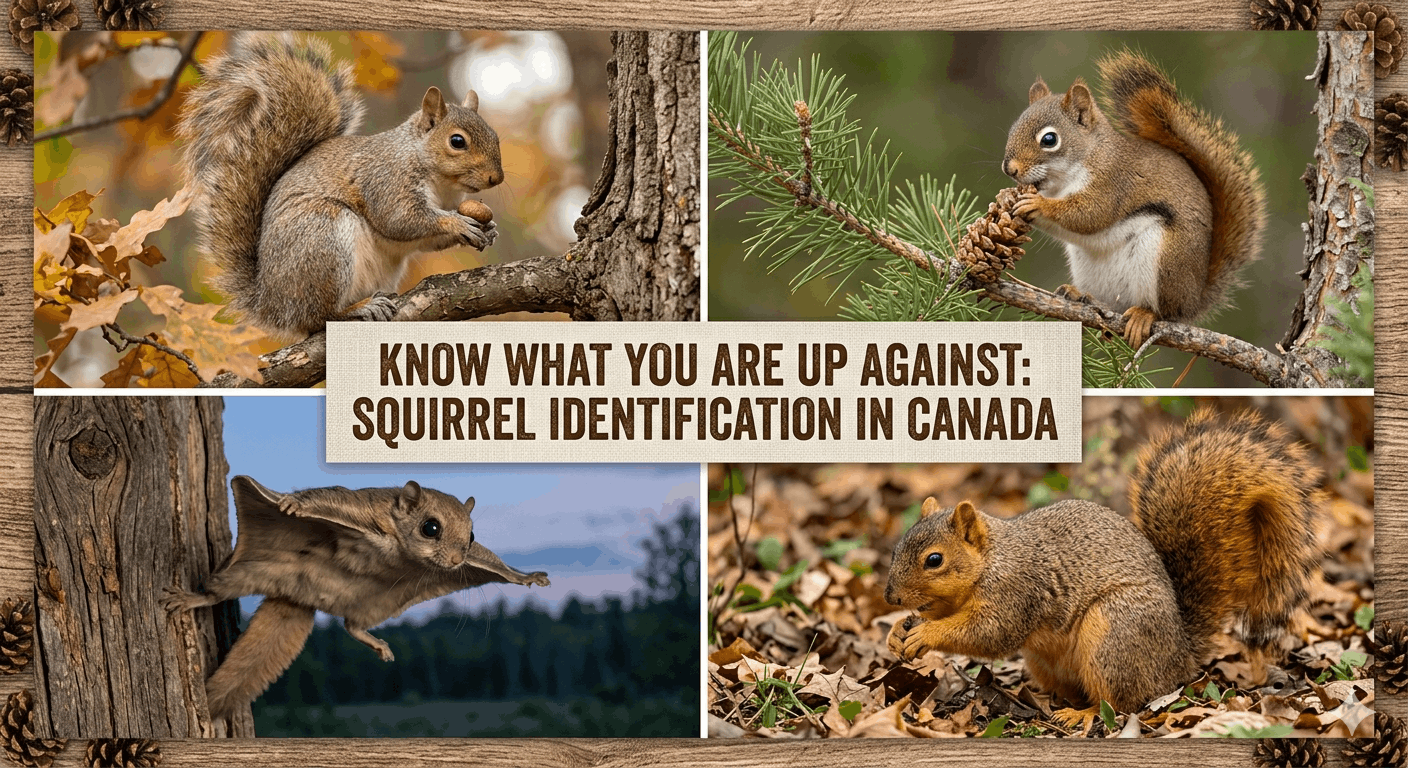
Here are the four most common species you will encounter:
- Eastern Gray Squirrel: The most frequently seen squirrel across Ontario, Quebec, and the Maritimes. It has gray or black fur and a large bushy tail. Bold, highly adaptable, and the number one culprit for attic invasions across Canada.
- American Red Squirrel Smaller, with reddish fur and a white belly. Widespread across Canada’s forests and known for aggressively defending food caches. They will chew through hard plastic containers to reach stored seed.
- Flying Squirrel is nocturnal, so scratching sounds at night are your biggest clue. They glide using a skin flap between their limbs and regularly nest in attics of older homes near mature forests.
- Fox Squirrel: The largest tree-dwelling squirrel in Ontario, with reddish-gray fur. Less frantic and more methodical than the gray squirrel, yet just as capable of leaving a trail of costly property damage behind.
Knowing your species tells you the activity schedule, the damage risk level, and which removal method fits best.
For a deeper look at how each species behaves and what it means for your home, check out our full breakdown of grey squirrel vs. red squirrel vs. flying squirrel.
Warning Signs: How to Tell You Have a Squirrel Problem
Squirrels are usually detected because of the noise they make. But sound alone is not enough to confirm an infestation. Here are the most reliable signs that squirrels are active in or around your home.
Inside your home:
- Scratching, running, or chewing sounds coming from your attic, ceiling, or walls, usually during daylight hours, for gray and red squirrels
- Foul smell from urine or droppings accumulating in attic insulation
- Dark stains or streaks on walls and ceilings from nesting debris and waste
- Visible damage to attic insulation, which squirrels tear apart to build nests
- Chewed electrical wiring found during inspections or renovations
- Small droppings that look similar to large rice grains are scattered near entry areas
Outside your home:
- Gnawed holes or chewed edges around soffits, vents, fascia boards, and roof edges
- Visible entry points near rooflines, usually about the size of a toonie or larger
- Stripped bark on young trees or chewed branches
- Dug-up flower bulbs, missing seeds, or disturbed garden beds
- Bird feeders are being emptied rapidly or damaged
If you notice more than three of these signs together, you almost certainly have an active squirrel presence. The faster you take action, the more damage you can prevent.
Why Squirrel Pest Control Is Not Optional: The Real Cost of Ignoring the Problem
A lot of homeowners put off dealing with squirrels because the animals seem non-threatening. That delay is almost always expensive. Here is what squirrels actually do to Canadian homes:
Fire Hazard from Chewed Wiring Squirrels chew constantly because their teeth never stop growing. Electrical wiring in attics is a frequent target, and chewed wires cause short circuits and attic fires. This is completely preventable with timely squirrel pest control.
Structural Damage Squirrels chew through wooden beams, roof decking, soffits, and fascia boards. Over time, this compromises your roof and creates larger entry points for other wildlife.
Insulation Destruction Squirrels shred attic insulation to build nests, reducing its thermal performance and driving up your heating bills. Replacement costs thousands of dollars in a typical Canadian home.
Health Risks: Squirrel droppings and urine contaminate your attic environment. They also carry fleas, ticks and can transmit leptospirosis through urine soaked into wood and insulation.
Garden and Landscape Damage Outside, squirrels dig up bulbs, strip tree bark, raid vegetable gardens, and drain bird feeders daily. Across a full season, the loss adds up fast.
What starts as a minor noise in the attic becomes a serious repair bill when ignored. Early action always costs less.
Squirrel Pest Control Methods That Actually Work
Now we get to the practical part. Effective squirrel pest control almost always requires a layered approach. No single method works in isolation. Here is a breakdown of every option available to Canadian homeowners.
Natural Deterrents
These are your first line of defense and work best as a preventive measure or for low-level yard activity.
- Hot pepper and spicy repellents. Squirrels dislike the burning sensation of capsaicin. Sprinkle cayenne pepper or chili powder around garden beds, near bird feeders, and along fence lines. Reapply after rain. You can also mix cayenne into birdseed since birds cannot taste capsaicin, but squirrels are repelled by it.
- Predator urine Products containing fox or coyote urine trigger the squirrel’s natural fear response. Apply around the perimeter of your yard and near known entry points. Replace after rainfall for continued effectiveness.
- Essential oil sprays, such as peppermint oil, white pepper, and garlic-based sprays, discourage squirrels from frequenting specific areas. Apply to garden beds, planter edges, and around the base of your home. These need regular reapplication to remain effective.
- Natural predators Hawks and owls, prey on squirrels naturally. Installing an owl box in your yard and keeping your grass short encourages raptors to hunt in your space, which naturally reduces squirrel activity over time.
Exclusion and Physical Barriers
Exclusion is the gold standard for keeping squirrels out of your home permanently. It addresses the root cause rather than just managing symptoms.
- One-way exclusion doors. This is the most effective and humane method for squirrels already inside your home. A one-way door is installed over the primary entry point, allowing squirrels to exit but preventing them from re-entering. Once all squirrels have left, the door is removed, and the opening is sealed permanently. This method is widely used by professional pest control services across Ontario.
- Hardware cloth and wire mesh. Use 16-gauge or heavier wire mesh to seal any openings around vents, soffits, chimneys, and gaps in fascia. Standard mesh hardware stores often sell is too light. Squirrels are powerful chewers and will work through weak materials quickly, so use galvanized steel mesh wherever possible.
- Drip edge installation: Installing a metal drip edge along your roofline is one of the strongest long-term squirrel deterrents available. It covers the vulnerable gap between your roof deck and fascia board that squirrels exploit as an entry point. Many Ontario wildlife removal companies include drip edge installation as part of a multi-year guarantee package.
- Tree branch trimming. Squirrels use overhanging branches as highways onto your roof. Trim all tree branches to at least 2 to 3 metres away from your roofline. This single step removes one of the most common access routes squirrels use to reach your attic.
- Metal collars on trees and posts. Wrapping the trunks of trees or deck posts with smooth metal collars prevents squirrels from climbing up. This protects bird feeders, garden beds, and deck structures from repeat intrusions.
Live Trapping and Removal
When squirrels are already inside your home or are causing ongoing yard damage, trapping becomes necessary.
How to trap squirrels properly:
- Use a cage trap measuring at least 5 by 5 by 18 inches, built from half-inch by one-inch wire mesh
- Bait the trap with peanut butter, sunflower seeds, walnuts, or sliced apple
- Place the trap near the entry point to your home or along a fence line where squirrel activity is heaviest
- Check the trap at least twice daily, morning and evening, without fail
- Once caught, relocate the squirrel at least 5 kilometres away from your property, in a wooded area away from other homes
- Reset and repeat until activity ceases completely
Important: Trapping and relocating wildlife in Ontario is governed by provincial regulations. Before setting any traps, check the current guidelines through the Ontario Ministry of Natural Resources to ensure you are following the law and handling squirrels safely and legally.
Professional Squirrel Pest Control
For squirrels inside walls, attics, or chimneys, professional removal is almost always the safest and most effective option. Professionals bring the right tools, know where to look for hidden entry points, understand local regulations, and can perform a full attic inspection to assess damage.
A proper professional service includes a thorough property inspection, installation of a one-way door, sealing of all secondary entry points, and a follow-up visit to confirm that all squirrels have exited. Many companies back their work with a multi-year guarantee. If you need reliable squirrel pest control in Ontario, 4K Pest Control provides expert, humane removal and full property protection services.
Real Damage, Real Costs: What Happens When Squirrel Problems Go Ignored
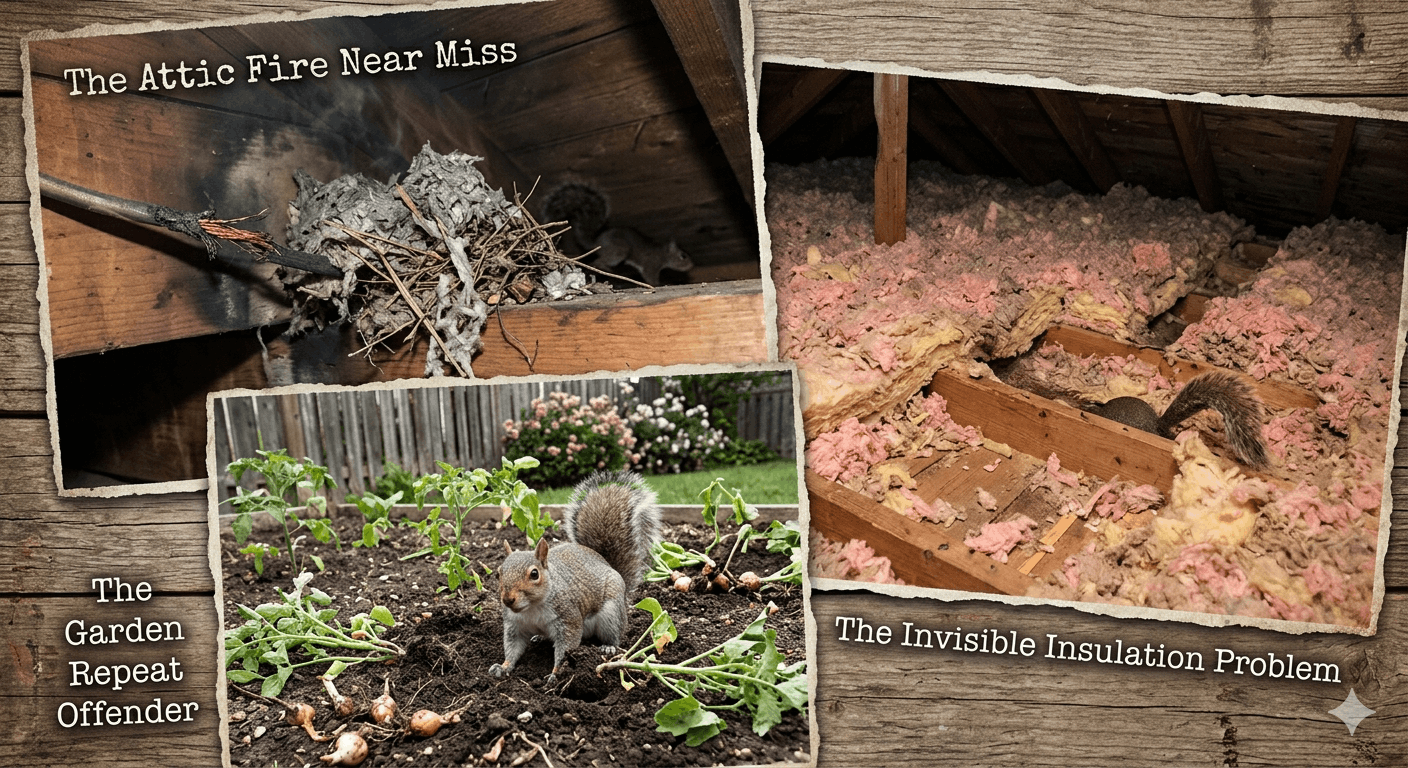
The Attic Fire Near Miss: A GTA homeowner ignored scratching sounds in October. By February, an electrician found three sections of chewed wiring dangerously close to sparking against dry insulation. Rewiring and cleanup cost over $6,000. Early exclusion would have cost a fraction of that.
The Invisible Insulation Problem: A Hamilton family noticed unusually high heating bills over two consecutive winters. A home energy audit revealed nearly 40 percent of their attic insulation had been shredded by nesting squirrels who had entered through an unsealed soffit gap. Total repair cost exceeded $4,500.
The Garden Repeat Offender: An Oakville couple lost their tulip bulbs to squirrels three falls in a row. Fencing did not work. Hardware cloth buried below planting depth, combined with cayenne pepper around the bed perimeter, finally solved the problem. Year four, every bulb came up.
The lesson is always the same: the longer you wait, the more it costs.
Long-Term Prevention: How to Keep Squirrels Away After Removal
Remove Food Temptations
- Move bird feeders at least 3 metres from your home or switch to weight-sensitive squirrel-proof feeders
- Store birdseed and pet food in sealed metal containers
- Pick up fallen fruit and nuts regularly and keep compost bins secured
Secure Your Home Exterior
- Seal all gaps around soffits, roof vents, chimneys, and utility entry points
- Use galvanized steel mesh over vents, never plastic, which squirrels chew through easily
- Inspect your roofline every spring for gaps between the fascia and the roof deck
Manage Your Yard
- Trim all tree branches at least 2 to 3 metres back from your roofline
- Remove brush piles, wood stacks, and overgrown shrubs near your foundation
- Keep your lawn mowed short to reduce ground-level cover
Schedule Annual Professional Inspections. Even careful homeowners miss things. A yearly inspection catches new entry points before squirrels do.
Your Home Is Worth Protecting: Do Not Wait for the Damage to Pile Up
Squirrel pest control is not complicated when you know what you are doing. It comes down to identifying the problem early, using the right combination of deterrents and exclusion methods, and making sure every entry point is properly sealed after removal.
The homes that suffer the worst damage are always the ones where the problem was ignored for months. A noise in the attic becomes a chewed wire. A chewed wire becomes a fire risk. A single entry point becomes five. Acting fast on squirrel pest control is genuinely one of the smartest investments a Canadian homeowner can make.
The team at 4K Pest Control handles squirrel infestations across Ontario with humane, thorough, and guaranteed methods. Whether you need an inspection, a one-way door installed, or full attic remediation, we are ready to help you protect your home. Visit 4kpestcontrol.ca to book your assessment and get ahead of the problem before it gets worse.
Frequently Asked Questions About Squirrel Pest Control
Q1: How do I know if squirrels are in my attic or if it is a different animal?
Squirrels are active during the day, so daytime scratching and running sounds in your attic strongly suggest squirrels rather than raccoons or rats. You may also notice gnawed entry points around your roofline and droppings that resemble large grains of rice. A professional inspection will confirm the species and map out the extent of the infestation.
Q2: Is it safe to seal entry points immediately after spotting a squirrel?
No, and this is one of the most common mistakes homeowners make. Sealing an entry point while squirrels are still inside traps them, which causes them to chew aggressively through walls and wiring to escape. Always use a one-way exclusion door first to allow squirrels to exit, then seal permanently after confirming they have all left.
Q3: Can squirrels cause a house fire?
Yes, and this is a documented risk. Squirrels chew on electrical wiring constantly because their teeth grow continuously and must be worn down. Exposed wires in an attic that contact dry insulation or wood framing are a real fire hazard. This is one of the strongest reasons not to delay squirrel pest control once you hear activity in your attic.
Q4: How many squirrels are typically in an attic infestation?
It varies. A single female found in an attic during spring or early fall is likely nesting and may have or be expecting a litter of two to six young. Outside of breeding seasons, multiple squirrels may share an attic space. A professional inspection is the only reliable way to assess population size and the scope of the removal needed.
Q5: Do squirrels come back after they are removed?
They can, especially if entry points are not sealed properly, and food sources remain available. Squirrels have strong homing instincts and will return to familiar nesting spots if given the opportunity. Thorough exclusion work combined with habitat modification is essential to prevent re-entry. This is why professional services with multi-year guarantees offer the best value.
Q6: When is squirrel activity highest in Canada?
Squirrel activity peaks twice a year, aligning with their two breeding seasons. The first is in late winter to early spring, typically February through April. The second is in mid to late summer, around July and August. These are also the periods when squirrels most actively seek out attic entry points for nesting. Inspecting and reinforcing your home before these windows is the most effective preventive strategy.