


Every day you wait, the nest grows bigger: read this bee pest control guide and act today
A single bee flying around your garden is harmless. A colony of thousands nesting inside your wall is a completely different story. Most homeowners ignore early bee activity, thinking it will sort itself out. It never does. The nest keeps growing, the colony gets more protective, and what started as a minor nuisance turns into a full-blown safety risk.
That is exactly why bee pest control matters more than most people realize. Whether you have spotted bees buzzing near your roofline, found a nest under your deck, or noticed unusual activity near a tree in your yard, this guide gives you everything you need to understand the problem and take the right steps before the situation gets out of hand.
Why a Bee Nest on Your Property Is Never a Small Problem

Many people see a small cluster of bees and assume it is temporary. The truth is that bee colonies grow fast and aggressively once they establish a nesting spot.
A honeybee queen lays up to 2,000 eggs per day. Within weeks, what looked like a handful of bees turns into a colony of tens of thousands. The bigger the colony grows, the more territorial the bees become. At that point, routine activities in your yard like mowing the grass, playing with children, or walking near the nest can trigger defensive stinging behavior.
According to the Centers for Disease Control, as many as 90 to 100 people die each year from allergic reactions to stings from insects like bees, wasps, and hornets. For families with children, elderly members, or anyone with a known allergy, a bee nest on the property is a genuine health risk that demands fast attention.
The longer you wait, the more established the colony becomes and the harder and more expensive it becomes to deal with. This is the core reason why early bee pest control action protects both your family and your wallet.
Know What You Are Dealing With: Common Bee Types in Canada
Before you take any action, you need to identify what type of bee has moved in. Different species nest in different places and require different approaches. Treating the wrong nest the wrong way can make the situation far more dangerous.
If you want a detailed breakdown of each species and how to tell them apart, check out our guide on types of bees every homeowner should recognise.
- Honeybees are among the most common and most important. They build large wax combs in hollow trees, wall cavities, attics, and roof spaces. Honeybee colonies grow massively over time and, once established inside a structure, can cause serious damage as honey and wax seep into walls. Because honeybees are essential pollinators, most pest professionals recommend relocation over extermination wherever possible.
- Bumblebees are rounder and fuzzier than honeybees and typically nest in the ground, under garden sheds, or in compost heaps. Unlike honeybees, bumblebees are capable of stinging multiple times, as their stinger is smoother and does not detach. The bumblebee sting is also considered one of the most painful. A disturbed bumblebee nest can result in multiple stings very quickly.
- Carpenter bees drill perfectly round holes into wooden structures like decks, fence posts, window frames, and garage doors. They lay their eggs deep inside the wood. Over time, repeated nesting causes significant structural damage that goes unnoticed until boards start to weaken and crack.
- Sweat bees and mining bees are smaller and tend to nest in dry, sun-exposed soil. While they are generally gentle and rarely sting, large aggregations in garden beds can feel alarming and need professional assessment.
Identifying the species correctly is the first step in choosing the right bee pest control approach. When in doubt, call a professional rather than guessing.
Early Warning Signs You Should Never Ignore
Catching a bee problem early is the difference between a quick professional visit and an expensive, complicated removal. Most homeowners miss the early signs simply because they do not know what to look for.
Watch closely for these signals around your property:
- Consistent bee traffic entering and exiting a small gap or crack in your walls, roofline, or fascia boards
- A low, steady humming sound coming from inside a wall or ceiling cavity
- Dark staining around an entry point caused by wax or honey seeping through the surface
- Round holes about the size of a fingertip are drilled into wood around your deck or eaves, indicating carpenter bee activity
- Small mounds of loose dirt in dry areas of your garden, pointing to ground-nesting bees
- A sudden increase in bee activity around a specific tree, shed, or corner of your yard
In cases of ground nesting bee infestations, homeowners may notice small areas of dirt or soil excavated around the nest entrance, as well as bees flying low to the ground. Carpenter bee infestations are highly visible as the insects create bored holes that measure 12mm in diameter or larger and may also leave visible sawdust behind.
If you notice any of these signs, do not poke around the area or attempt to block the entry point. Either action can provoke the colony into defensive mode immediately. Instead, keep a safe distance and contact a bee pest control professional straight away.
What Attracts Bees to Your Home in the First Place
Understanding why bees choose your property helps you take smarter preventive action. Bees are not randomly selecting homes. They look for very specific conditions before settling in.
Bees scout for locations that offer shelter, warmth, and easy access. If there are cracks or holes in your exterior, you may find bees nesting in your attic, roof space, or wall cavities. Any unsealed gap wider than a few millimeters is an open invitation for a scouting bee to investigate.
They are also drawn to sweet smells. Uncovered food at outdoor gatherings, open garbage bins, fruit trees dropping ripe fruit on the ground, and even sweet-smelling flowers planted near entry points all attract bee activity close to your home.
Standing water in gutters or garden containers provides bees with a hydration source close to the nest. Old unused structures like abandoned sheds, hollow fence posts, and disused garden equipment offer ready-made nesting spots that bees quickly claim as their own.
Addressing these attractants as part of your ongoing property maintenance significantly reduces the risk of bees ever deciding your home is a good place to set up a colony.
Bee Pest Control: Safe Prevention Steps You Can Take Right Now
You do not need to wait for a professional visit to start protecting your property. These practical prevention steps reduce the chances of bees nesting on or near your home significantly.
- Seal every gap and crack on your exterior walls. Walk around the full perimeter of your home and inspect the area where walls meet the roofline, around utility pipes, behind shutters, and along the foundation. Use a quality exterior sealant or caulk to close any openings. Pay special attention to areas around fascia boards and roof eaves.
- Replace damaged or weathered wood promptly. Carpenter bees target soft and ageing wood. Rotting fence boards, old deck planks, and peeling wooden window frames are prime nesting targets. Replacing or painting these surfaces removes the invitation.
- Keep your garbage bins tightly sealed. Exposed food waste and sweet-smelling refuse attract foraging bees looking for easy energy sources near a potential nesting site.
- Clean up fallen fruit regularly. If you have fruit trees, apple drops, berry bushes, or a vegetable garden, clear fallen produce quickly. Rotting fruit ferments and releases a strong, sweet smell that draws bees from a considerable distance.
- Trim back overgrown vegetation near your home. Dense shrubs growing against your walls, thick ivy coverage, and unchecked hedgerows close to entry points all create sheltered spots that bees find appealing for nesting.
- Install fine mesh over vents and chimneys. These are among the most common entry points for scout bees looking for a cavity to establish a new colony. Mesh covers block access while still allowing proper ventilation.
These steps do not guarantee zero bee activity, but they make your property significantly less attractive to scouting bees during swarm season each spring and summer.
When to Call a Bee Pest Control Professional and Why DIY Is Dangerous
This is the section most competitor blogs avoid being direct about, and it is the most important one in this guide.
Many homeowners reach for a can of spray and attempt to handle a bee nest on their own. This decision puts them at serious risk. Bee removal should only be carried out by a licensed pest control professional, as it is dangerous and bees can sting in large numbers.
A disturbed colony responds collectively. What starts as one or two defensive bees can escalate to hundreds within seconds. Without proper protective equipment, the right treatment product, and knowledge of the specific species, a DIY attempt can result in serious injury, especially for anyone with an allergy who may not even know it yet.
Licensed bee pest control technicians bring several critical advantages to the job:
- They correctly identify the species before choosing a treatment approach
- They carry full protective equipment designed for high-activity situations
- They locate all nest entry and exit points before beginning treatment
- They use targeted treatments that are effective without causing unnecessary harm to surrounding pollinators
- They seal entry points after removal to prevent new colonies from moving into the same space
- They provide follow-up monitoring to confirm the infestation is fully resolved
They provide follow-up monitoring to confirm the infestation is fully resolved
If you’re curious exactly how this looks in practice, our guide on what to expect during professional bee hive removal breaks down the entire process step by step, from identification to final sealing.
For honeybees specifically, a good pest control professional will often coordinate with a local beekeeper to relocate the colony rather than destroy it. This approach protects an ecologically vital species while still solving your problem safely.
The bottom line is simple. If you have spotted a nest, stay away from it and call a professional. The cost of a professional visit is always far less than the cost of treating multiple stings, medical bills, or structural repairs from a colony that spent years inside your wall undetected.
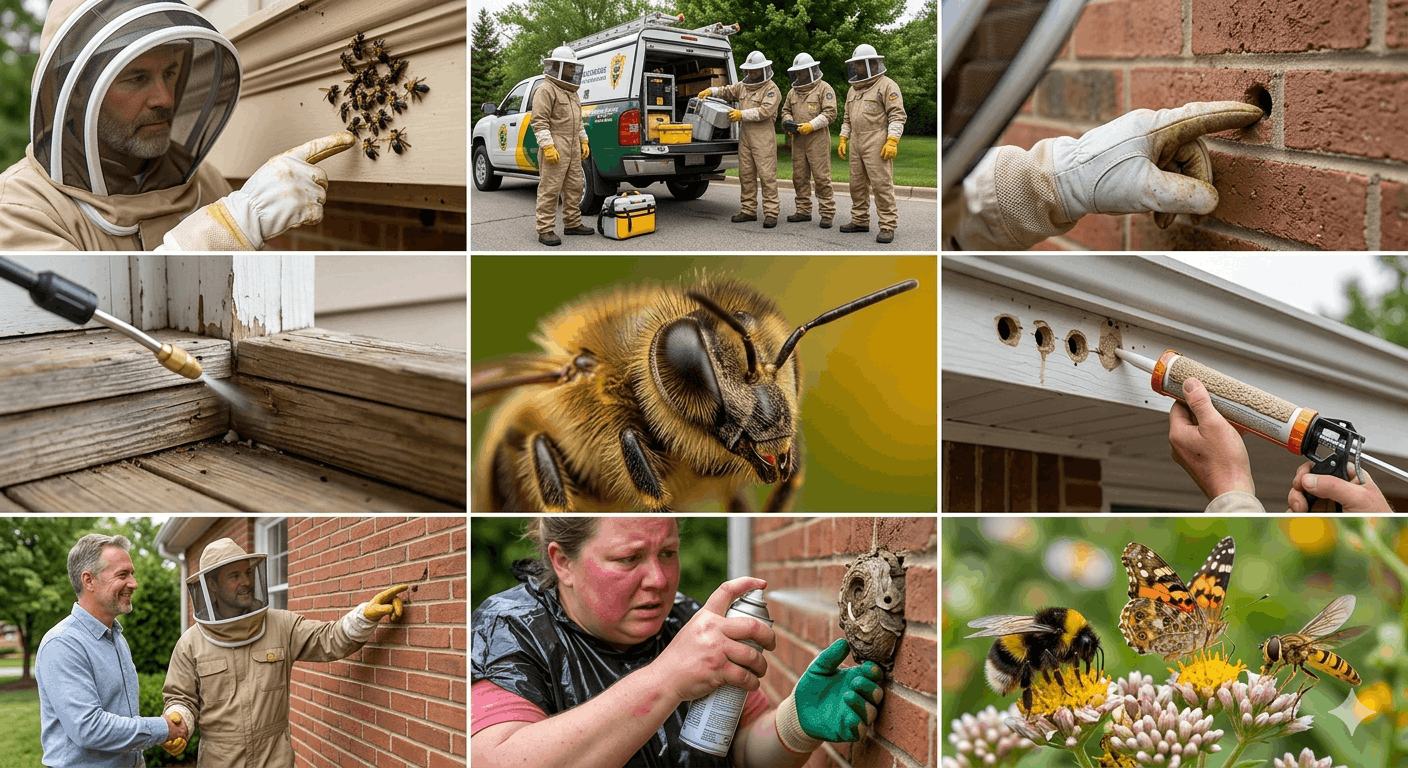
Real Situations Where Delayed Action Made Everything Worse
Pest control professionals across Canada regularly deal with cases where homeowners waited too long and paid heavily for it.
A common scenario involves bees entering through a small gap under a roofline in spring. The homeowner notices increased bee activity but assumes the nest will move on. By late summer, the colony has grown to tens of thousands, and honey has begun seeping through the interior ceiling. At that point, removal requires cutting into the structure, full nest extraction, honey and wax cleanup, and structural repair. A job that would have cost a few hundred dollars in spring becomes a multi-thousand-dollar project by fall.
Another frequent situation involves carpenter bees drilling into an older wooden deck year after year. Each spring, new bees return to the same wood and extend the tunnels deeper. After three or four seasons of unnoticed activity, entire deck boards become structurally compromised and collapse under weight. The deck requires full replacement, which could have been prevented by addressing the bees in the first year.
These are not rare edge cases. They happen regularly to careful, responsible homeowners who simply did not act quickly enough when they first noticed the signs.
Your Next Step: Act Before the Nest Grows Any Bigger
Protecting your home from bees is not complicated when you know the signs, understand the risk, and take action at the right time. Seal the gaps in your exterior. Remove attractants from your yard. Inspect your wooden structures regularly. And the moment you spot consistent bee activity near or inside your home, call a licensed bee pest control professional before the colony has time to establish itself deeply.
Take control today before a small risk turns into a big problem.
If you are in the Greater Toronto Area or Ontario, the team at 4K Pest Control is ready to help. They bring the expertise, equipment, and knowledge to safely and effectively handle bee infestations of every kind. Whether it is a routine inspection or an urgent nest removal, 4K Pest Control gives you the fast, professional response your home deserves. Reach out today and take back your property with confidence.
Frequently Asked Questions About Bee Pest Control
Q1. Is it safe to leave a bee nest alone if it is not bothering anyone?
Leaving a nest in place might feel harmless in the short term, but colonies grow rapidly and become increasingly defensive as they expand. A nest that seems quiet today can become a serious stinging risk by late summer when the population peaks and food competition increases outside the hive.
Q2. What is the best time of year to deal with a bee nest?
Early spring is the ideal window for bee pest control because colonies are small and the queen has only just begun establishing the nest. Acting early means fewer bees, a smaller nest structure, and a much simpler and safer removal process for the pest control technician.
Q3. Can bees come back to the same spot after removal?
Yes, they absolutely can. Scout bees from a new swarm may detect the chemical traces left by the previous colony and identify the same spot as a desirable nesting location. This is why sealing all entry points after removal is a critical part of any professional bee pest control service.
Q4. How do I know if I have bees inside my walls?
Listen for a consistent low humming sound coming from inside a wall or ceiling. You may also notice dark staining around a small gap where bees enter and exit, or a faint sweet smell that intensifies during warmer parts of the day as the wax and honey heat up inside the cavity.
Q5. Are all bees treated the same way by pest control professionals?
No. Different species require very different approaches. Honeybees are typically relocated rather than exterminated because of their ecological value. Bumblebees, carpenter bees, and ground-nesting species each have specific treatment methods suited to their nesting behavior and location on your property.
Q6. How long does professional bee pest control treatment take?
Most residential bee nest treatments take between one and three hours, depending on the size of the colony, the location of the nest, and whether structural access is required. Your technician will give you a clear timeline and aftercare instructions before beginning the job.