


You walk outside in the morning, catch a whiff of something sharp and unpleasant, and then spot small cone shaped holes scattered across your lawn. If this sounds familiar, you likely have a skunk problem. Skunks are one of the most common wildlife nuisances that Canadian homeowners deal with, especially as temperatures rise in spring and summer. While they are relatively small animals, the damage they cause and the health risks they bring are anything but small.
This guide gives you everything you need to know to get rid of skunks safely, humanely, and permanently. You will learn how to spot the early signs of a skunk problem, understand why skunks are attracted to your yard, and take practical steps to remove them and keep them from coming back. Whether you are dealing with a single skunk passing through or a family that has decided to den under your deck, this blog has you covered from start to finish.
Why Skunks Come to Your Property in the First Place
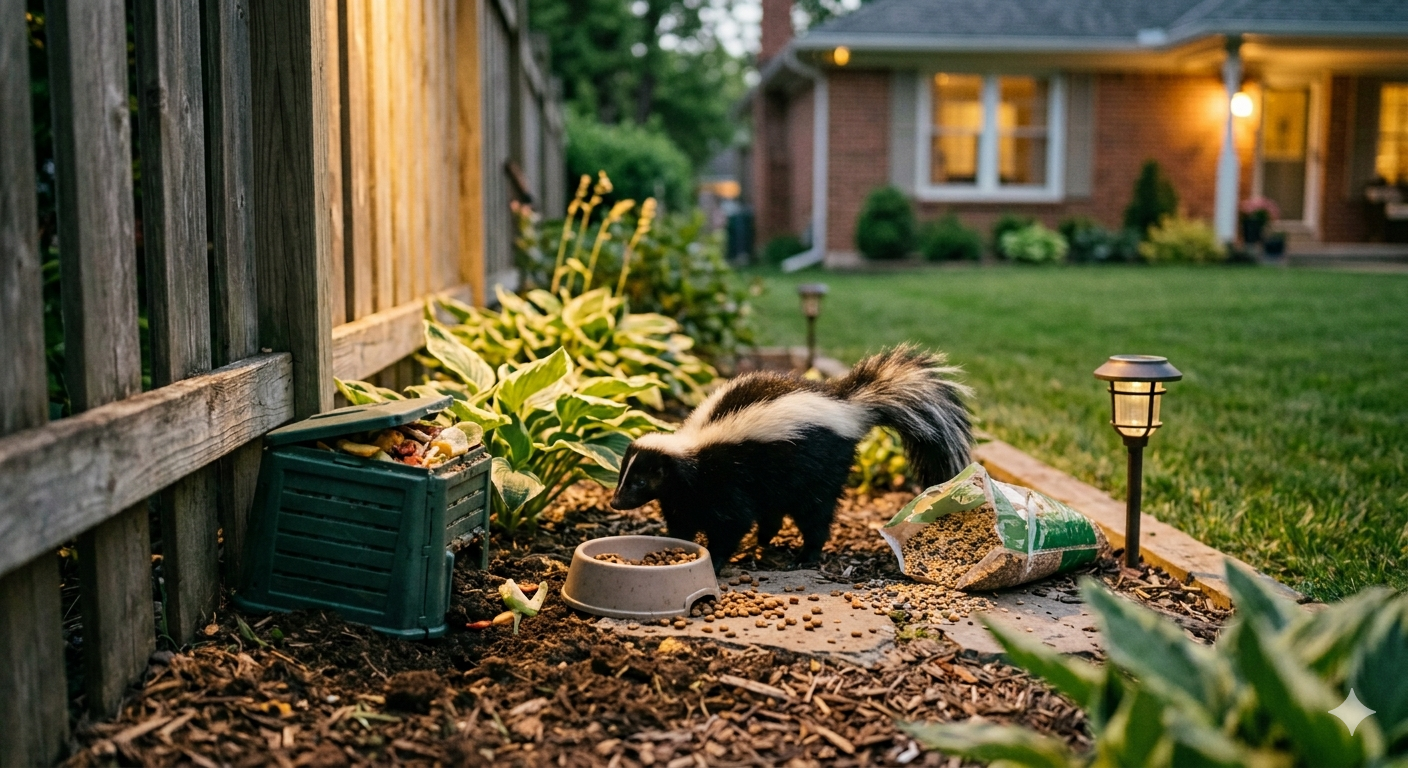
Before you can effectively deal with a skunk problem, you need to understand what draws these animals to your home. Skunks do not show up randomly. They follow food, water, and shelter, and your property may be offering all three without you even knowing it.
Skunks are opportunistic feeders. They eat grubs, insects, small rodents, berries, fallen fruit, and just about anything they can scavenge from your garbage. Here are the most common things that attract skunks to residential properties:
- Unsecured garbage cans or bins left outdoors overnight
- Pet food bowls left outside after feeding time
- Bird feeders that drop seeds onto the ground
- Compost piles that contain food scraps
- Standing water in bird baths, garden ponds, or drainage areas
- Grubs and insects living beneath your lawn
- Wood piles, dense shrubs, and cluttered storage areas that offer shelter
Once a skunk finds a reliable food source near your home, it keeps coming back. And once it finds a warm, quiet spot to den, it may stay for months. Understanding these attractants helps you take the first and most important step: removing what is pulling skunks onto your property.
How to Identify a Skunk Problem Early
One of the biggest mistakes homeowners make is waiting too long to act. By the time you see a skunk up close, the problem is often already well established. Learning to spot the early warning signs helps you respond quickly before things escalate.
Skunks are nocturnal, which means they are most active at night and around dusk and dawn. You may rarely see them directly, but they leave behind clear clues that they have been on your property.
Here are the top signs that you have a skunk problem:
- Small, cone shaped holes in your lawn: Skunks dig for grubs and insects just below the surface of the grass. These holes are usually about two to three inches wide and appear in clusters.
- A strong musky or sulfuric odor: The smell of skunk spray is one of the most unmistakable odors. Even if no one has been sprayed directly, you may notice a faint skunk scent lingering near your deck, under your porch, or around your garden.
- Disturbed garbage bins: If your trash cans are tipped over or the lids are off in the morning, a skunk may have been investigating overnight.
- Tracks in soft soil or mud: Skunk footprints show five toes on each foot with visible claw marks.
- Droppings near the foundation of your home: Skunk droppings are small and tubular, often containing insect parts or berry seeds.
The sooner you identify these signs, the easier it becomes to deal with the situation before a skunk settles in for good.
Understanding Skunk Behavior and Seasonal Patterns
Knowing how skunks behave throughout the year helps you plan your response at the right time. Skunk activity follows a seasonal pattern that Canadian homeowners should be aware of.
During winter, skunks enter a state called torpor. This is not full hibernation, but a period of reduced activity where they stay in their dens and conserve energy. As temperatures begin to rise in late February and March, skunks become active again. This is when breeding season begins. A skunk’s gestation period lasts roughly 60 to 75 days, which means litters of four to seven young are typically born between April and June.
This is the most important window for homeowners to take action. A single skunk that denned under your deck in late winter could become a family of eight or more by early summer. Once kits are born, removal becomes more complicated because separating a mother from her young requires professional handling.
Spring is also when skunks do the most visible damage to lawns. As the ground thaws and grub populations increase near the surface, skunks dig more aggressively in search of food. This is why you will often see a sudden spike in lawn damage from skunks in April and May.
Acting early in the season before kits are born gives you the best chance to remove skunks with minimal disruption and cost.
How to Get Rid of Skunks: Step by Step
Now that you understand what attracts skunks and how they behave, here is a practical step by step approach to getting rid of them from your property.
Step 1: Remove All Food Sources
This is the single most effective thing you can do. If your property does not offer food, skunks will move on quickly on their own. Take the following actions right away:
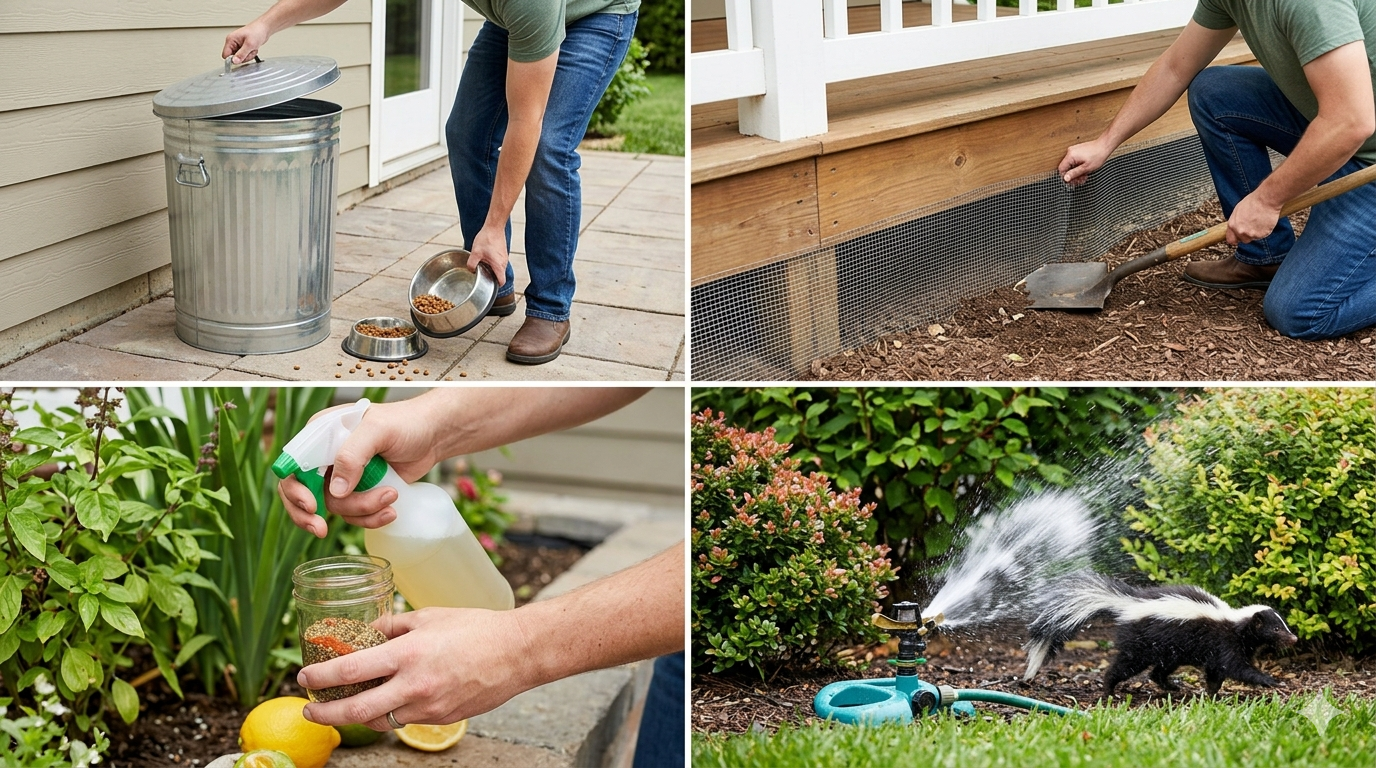
- Use garbage cans with tight fitting, locking lids. If possible, store your bins in a garage or shed until collection day.
- Bring pet food and water bowls indoors every evening, especially after sunset.
- Clean up birdseed from the ground around feeders. Consider switching to spill proof feeders or removing them temporarily.
- Pick up fallen fruit from trees as soon as it drops.
- Move your compost to a sealed, skunk proof bin with a secure lid.
- Fix any leaking outdoor taps or drainage points that create standing water.
Step 2: Eliminate Shelter and Den Sites
Skunks need a quiet, dark, enclosed space to den. Your property may be offering several of these without you realizing it.
- Block access under your deck, porch, and shed by installing heavy duty wire mesh or hardware cloth along the base. Bury it at least six inches into the ground to stop skunks from digging underneath.
- Clear away wood piles, debris, old furniture, and overgrown vegetation that skunks could use for cover.
- Trim back dense shrubs and low hanging branches that create dark, sheltered hiding spots.
- Fill in any gaps or cracks in the foundation of your home or outbuildings.
Step 3: Use Natural Repellents
Once you have removed food and shelter options, natural repellents can help discourage skunks from staying. These are not permanent solutions on their own, but they work well as part of a broader strategy.
- Citrus peels placed around the edges of your yard release a scent that skunks dislike. Refresh them every few days, especially after rain.
- Cayenne pepper sprinkled around entry points and garden beds irritates skunks’ sensitive noses.
- Ammonia soaked rags placed near suspected den sites create a smell that mimics predator urine. Replace them every few days.
- Fox or coyote urine products, sold at most hardware stores, signal danger to skunks and encourage them to move away from the area.
- Sulfur pellets are another option that produces a smell skunks find offensive.
Keep in mind that repellents need regular reapplication, especially after heavy rain. They are most effective when combined with the other steps in this guide.
Step 4: Install Motion Activated Deterrents
Skunks are startled easily. Motion activated devices use their skittish nature against them without causing any harm.
- Motion activated sprinkler systems detect movement and release a burst of water, which frightens skunks and sends them running without any chemicals or contact.
- Motion activated lights can also discourage skunks since they prefer dark, quiet environments.
- Ultrasonic repellent devices emit high frequency sounds that are uncomfortable for skunks but inaudible to humans.
These devices work best when placed near known entry points, along fence lines, and close to any areas where you have seen skunk activity.
Health Risks Skunks Bring to Your Home and Family
Many homeowners focus only on the smell issue and underestimate the health risks that skunks carry. This is an important area that deserves your attention, especially if you have children or pets.
Skunks are one of the top wildlife carriers of rabies in North America. A rabid skunk may behave abnormally, appearing active during daytime hours, stumbling, or approaching humans without fear. If you notice a skunk behaving this way, do not go near it. Contact animal control or a licensed wildlife removal service immediately.
Beyond rabies, skunks can also carry leptospirosis, a bacterial infection that spreads through their urine and can contaminate soil and water. This infection can affect humans and pets and can lead to serious kidney and liver damage if untreated.
Skunk spray itself, while not chemically dangerous, can cause eye irritation, nausea, and vomiting in both humans and pets at close range. Dogs that have been sprayed directly in the face may experience temporary vision problems and significant distress.
Keeping skunks away from your property is not just about comfort. It is a genuine health and safety issue that deserves a serious and prompt response.
When to Call a Professional Wildlife Removal Service
DIY methods work well for prevention and for encouraging a passing skunk to move along. But there are situations where professional help is the safest and most effective choice.
You should contact a licensed pest and wildlife control professional when:
- A skunk has already established a den on your property, especially under a deck, porch, or crawlspace
- You suspect a mother skunk with kits is present
- A skunk is displaying unusual behavior that may indicate rabies
- Your DIY efforts have not produced results after two weeks
- You or your pet has been sprayed and the skunk is still on the property
- You live in a municipality where trapping or relocating wildlife requires a licensed professional
Professional wildlife removal specialists use humane live traps, exclusion barriers, and one way doors that allow skunks to exit a den site without being able to re enter. They also follow provincial and local wildlife regulations so that the removal is done legally and ethically.
Trying to trap a skunk yourself without experience is risky. A stressed skunk inside a trap will spray, and relocating wildlife without a permit is illegal in many provinces across Canada.
Long Term Prevention: Keeping Skunks Away for Good
Getting rid of a skunk is one thing. Keeping them away permanently takes consistent effort and a few smart habits that become part of your regular home maintenance routine.
Here are the long term habits that make the biggest difference:
- Inspect the perimeter of your home, deck, and outbuildings every spring for gaps, cracks, and soft ground areas where skunks could dig in. Address any issues immediately.
- Maintain a clean yard throughout the year. Do not let leaves, debris, wood piles, or old equipment accumulate in corners of your property.
- Schedule annual grub control treatments for your lawn. Fewer grubs means less reason for skunks to come digging.
- Keep exterior lighting functional around the perimeter of your home.
- Refresh your natural repellents regularly during peak skunk seasons, which are spring and summer.
- Talk to your neighbors about coordinating prevention efforts. Skunks move across multiple properties, so a community wide approach works better than individual action alone.
Consistent prevention is far easier, cheaper, and less stressful than dealing with a full skunk infestation after the fact.
Say Goodbye to Skunks and Hello to a Safe, Fresh Yard Again
Dealing with skunks does not have to be a source of stress or anxiety. When you understand what attracts them, recognize the signs early, and take systematic action, you can protect your home and your family without harming the animal or putting yourself at risk.
From removing food sources and blocking den sites to using natural repellents and installing motion activated deterrents, every step you take reduces the chances of a skunk making your property its permanent home. And when the situation goes beyond what a homeowner can safely handle alone, calling a professional is always the smart move.
If you are in Canada and need expert help getting rid of skunks this season, 4K Pest Control is here for you. Their licensed and experienced team handles skunk removal and wildlife control with care, efficiency, and full compliance with Canadian wildlife regulations. Do not wait until one skunk becomes eight. Visit 4kpestcontrol.ca and get professional help today.
Frequently Asked Questions About Getting Rid of Skunks
Q1: What is the fastest way to get rid of skunks from my yard?
The fastest approach is to remove every food source on your property immediately, including pet food, exposed garbage, and fallen fruit. Combine this with ammonia soaked rags or citrus peels near entry points and motion activated sprinklers to drive skunks away quickly. For established dens, calling a professional wildlife removal service produces the fastest and safest results.
Q2: Will skunks go away on their own without any action?
Skunks rarely leave on their own once they find a reliable food source or establish a den on your property. They are creatures of habit and will return night after night as long as food and shelter are available. Taking action early in the season significantly increases your chances of resolving the problem before it worsens.
Q3: Is it safe to trap a skunk myself at home?
Trapping a skunk yourself comes with serious risks, including being sprayed and potential exposure to rabies. In many Canadian provinces, relocating wildlife without a permit is also illegal. It is always safer and more effective to hire a licensed wildlife removal professional who has the proper equipment, training, and legal authority to handle the situation.
Q4: What smell keeps skunks away most effectively?
Skunks are highly sensitive to certain strong scents. Citrus peels, cayenne pepper, ammonia, and predator urine products such as fox or coyote urine are the most commonly effective natural repellents. These need to be reapplied regularly, especially after rain, to maintain their effectiveness around your property.
Q5: How do I know if a skunk has made a den under my deck or porch?
The clearest signs include a persistent musky odor near the base of your deck, scratching or rustling sounds at night, and loose or disturbed soil along the edges of your structure. You may also notice skunk tracks or droppings nearby. If you suspect an active den, do not attempt to block the entrance yourself as the animal may be inside.
Q6: Can skunks cause damage to my lawn and garden?
Yes, skunks cause noticeable damage to lawns by digging small cone-shaped holes while searching for grubs and insects just below the surface. Over time, this digging can kill grass patches and disrupt the root system of your lawn. They can also dig up garden beds and disturb seedlings. Controlling grub populations in your lawn is one of the most effective long-term ways to reduce skunk digging activity.