


Most people treat raccoons like a minor nuisance. It starts with the garbage. Then the noise at 2 a.m. Then the hole in your soffit that definitely wasn’t there last week.
This is not a coincidence, but it’s a pattern. Across Canada, urban raccoon populations are different from their rural cousins: smarter, bolder, and far more comfortable around humans.
And by the time most homeowners realize they have a raccoon problem, the raccoon has already made itself very comfortable. If it’s a mother, she may have raised a litter inside your walls. Either way, she’s left behind feces that can remain infectious for years, long after the animal itself is gone.
That doesn’t mean you need to panic. It means you need a plan. Raccoons are creatures of habit, and that predictability is exactly what makes them manageable. That’s the part people underestimate. A raccoon isn’t just chewing your insulation. It’s creating a health hazard with a shelf life.
Here’s a clear, step-by-step guide on how to get rid of raccoons safely, legally, and permanently.
Why Raccoons Move Into Your Home
Raccoons (Procyon lotor) are among the most intelligent and adaptable urban wildlife species in North America. They’re nocturnal animals, which means they do their damage quietly while you’re asleep, and they’re remarkably good at exploiting human infrastructure.
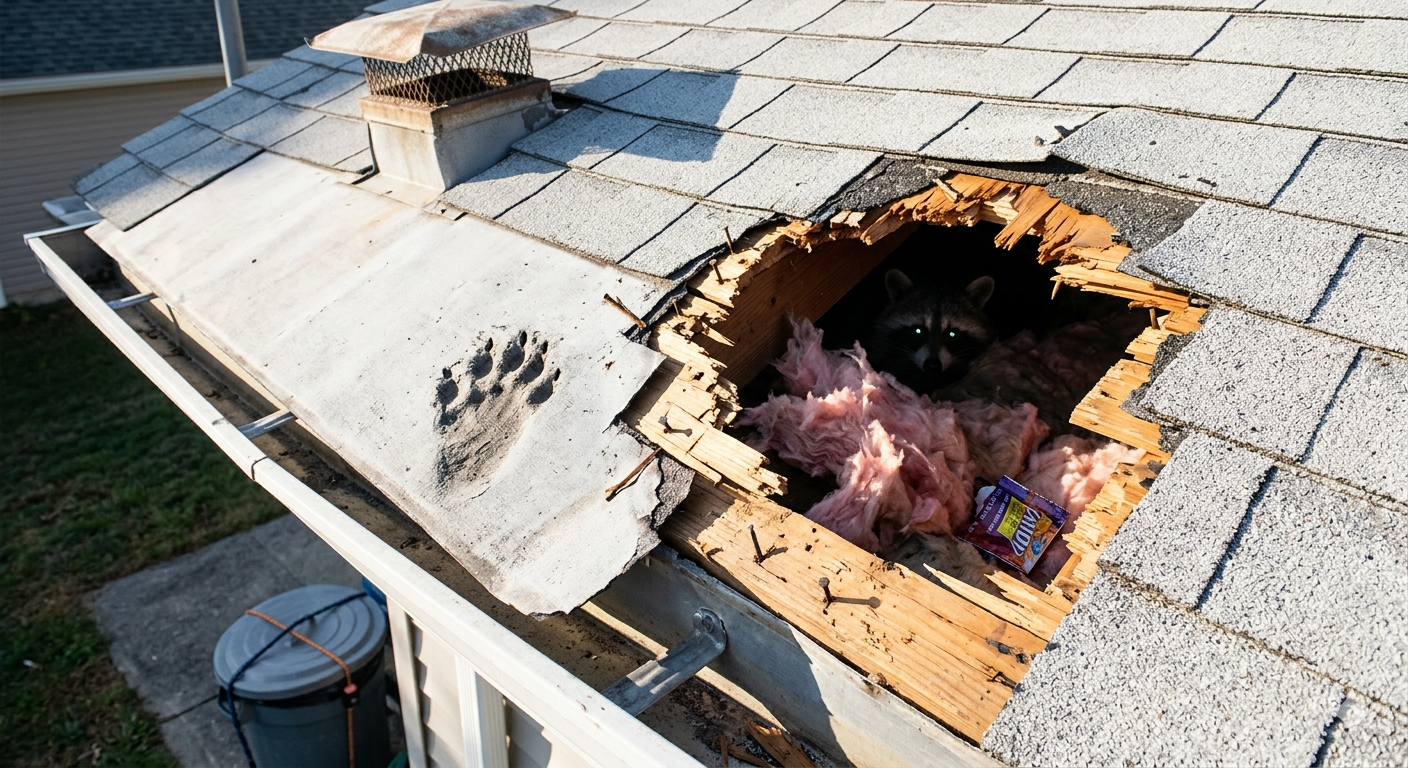
They are opportunistic feeders. This means if your property offers food, water, or shelter, they will find it. Urban wildlife like raccoons have adapted so well to suburban life that they actually thrive better in cities than in forests.
They will use your attic as a den, turn your crawl space into a nursery and treat your compost bin as a personal buffet.
These are highly intelligent animals. They have incredibly dexterous front paws, almost hand-like, which means they can open garbage cans, unlatch gates, and manipulate objects in ways that constantly surprise homeowners.
They also have exceptional memory, retaining information for up to three years. The biggest draws to your property are:
- Unsecured garbage cans (the #1 attractant)
- Pet food left outdoors, even in a small bowl, is an open invitation
- Bird feeders, raccoons love seed
- Compost bins without secure lids
- Fallen fruit from trees in your yard
- Standing water and ornamental fish ponds
- Grubs in your lawn, raccoons will dig to find them
Signs of Raccoon Activity: How to Know You Have a Problem
Before you do anything, you need to confirm raccoons are actually the culprit. Here’s what to look for:
Outdoor signs
Raccoons leave several signs of their presence:
- five-toed hand-like tracks near water and garbage cans,
- scattered trash,
- patches of dug-up lawn from grub hunting,
- damaged garden beds with missing produce, and
- concentrated droppings at repeated latrine spots near trees, sandboxes, or log piles.
Indoor/structural signs
Raccoons living inside a structure leave several telling signs. Scratching, thumping, or other noises coming from the attic, walls, or crawl space, particularly at night, are often the first thing homeowners notice.
A closer look into the attic may reveal torn or displaced insulation. Raccoons are also capable of causing serious exterior damage, physically tearing off soffits, fascia boards, and shingles to force their way inside.
A strong ammonia-like odor from urine soaking into the structure is another clear indicator, along with visible entry points around chimney openings, vents, or gaps where the roof meets the wall.
If you’re hearing noises in spring, especially between March and July, there’s a good chance you’re dealing with a mother raccoon and her raccoon kits. This is actually the trickiest time to deal with a raccoon infestation.
Health & Property Risks: Why You Shouldn’t Ignore a Raccoon Problem
This part is important. Raccoons are not just a nuisance; they carry real health hazards that can affect your family and pets. For instance, Baylisascaris infection, while rare, can cause serious neurological illness in humans, making feces cleanup no job for bare hands.
One of the biggest concerns is raccoon roundworm, since eggs found in raccoon feces can infect both humans and pets if accidentally swallowed. Raccoons are also among the most common carriers of rabies in North America.
On top of that, leptospirosis, a bacterial infection spread through raccoon urine, can make both humans and animals seriously ill. Canine distemper virus is another issue; it poses no risk to people, but it can be deadly for unvaccinated dogs.
The damage raccoons do to property is just as serious. They tear apart and contaminate attic insulation, chew through wiring, which can start a house fire, rip off fascia boards, break chimney caps, and weaken the structure of a home over time.
Always wear disposable gloves and a respirator if cleaning up contaminated feces or handling anything raccoons have been near. Better yet, call a professional.
How to Get Rid of Raccoons: Methods That Actually Work
So, how do you actually get rid of raccoons? Here’s the honest breakdown: some methods work, some don’t, and some require professional help.
1. Habitat modification (most effective long-term)
The single best thing you can do is make your property less attractive to raccoons. This is called habitat modification, and it works because it removes the reasons they showed up in the first place.
- Secure garbage cans with a locking lid or bungee straps
- Bring pet food inside every night, no exceptions
- Remove bird feeders or switch to raccoon-proof designs
- Cover your compost bin with a latching lid
- Pick up fallen fruit regularly
- Empty any standing water around the yard
- Install wire mesh around ornamental fish ponds
2. Exclusion methods (sealing entry points)
If raccoons are already getting into your attic, crawl space, or chimney, exclusion is your most important step. This means sealing all entry points with hardware cloth or wire mesh, materials that raccoons cannot chew or pull apart.
- Install a chimney cap, one of the most common entry points
- Cover all roof vents with heavy-gauge wire mesh or vent covers
- Repair or reinforce fascia boards and soffits
- Seal any gaps where the roof meets the wall
- Trim tree branches that overhang the roof; raccoons use these for roof access.
- Wrap tree trunks with sheet metal to prevent climbing
Remember, never seal an entry point until you are certain no raccoon is inside. Trapping an animal inside your walls is both inhumane and will create a much bigger problem.
3. Smell and taste repellents
You’ve probably heard about natural smell repellents such as coyote urine, ammonia, peppermint oil, and cayenne pepper. These can work as a short-term deterrent, particularly around garden beds.
The truth? They need consistent reapplication, especially after rain. And raccoons are smart enough to investigate the source of a new smell rather than flee from it. Think of repellents as a stalling tactic, not a solution.
4. Motion-activated devices
A motion-activated sprinkler is one of the more effective DIY tools. Raccoons hate the sudden burst of water; it startles them consistently without harming them.
- Motion sensor lights: bright, flashing, and unexpected disrupts nocturnal behaviour
- Motion-activated sprinkler systems are very effective around gardens and ponds
- Ultrasonic deterrent devices’ results are mixed and not yet well-regulated
5. Trapping and removal
A live cage trap or humane trap can be effective if you need to remove a raccoon that’s already settled in. However, there are some important things to know before you go this route in Canada.
- In Ontario, wildlife regulations restrict relocation; releasing a raccoon more than 1 km from where it was caught requires a licensed trapper or registered trapper.
- Removing a mother raccoon during nesting season (March to July) without her kits will result in the kits starving, which is inhumane and illegal.
- Never use poison; it’s illegal under provincial wildlife regulations and poses serious risks to children, pets, and other wildlife.
- Call a professional raccoon removal service if there’s a mother with kits. This situation requires expertise.
How to Keep Raccoons Away for Good: Prevention Tips
You’ve dealt with the immediate problem. Now let’s make sure it doesn’t happen again. Real raccoon control is about removing what attracts them and blocking what they use to get in to get rid of raccoons.
- Secure garbage cans: invest in locking bins or store them in a garage until collection day
- Install an electric fence around vegetable gardens and chicken coops if raccoons are frequent visitors.
- Use heavy-gauge wire mesh screening on all vents, chimneys, and foundation gaps every spring.
- Check your roof and attic before raccoon breeding season begins in late winter.
- Have a pest control company apply exclusion devices after any removal to prevent re-entry.
Once a raccoon has established a den site on your property, it will return. Their sense of smell and strong memory retention mean they remember exactly where they found food or shelter. That’s why a physical exclusion method, not just a repellent, is always necessary after removal.

When to Call an Expert for Raccoon Removal
Wildlife technicians get this question all the time: ‘I’ve done everything I can think of, why are the raccoons still coming back?’ Usually, the answer is simple. You’ve been treating the symptoms, not the cause.
DIY solutions work well for deterrence and prevention. But certain situations really do require a professional pest control company or licensed wildlife control operator:
- Raccoons are in your attic, walls, chimney, or crawl space
- You suspect a mother raccoon with kits (especially during spring nesting season)
- There is significant structural damage, such as torn insulation, chewed wiring, or damaged HVAC systems.
- You need raccoon latrine cleanup involving contaminated feces (health risk requires proper decontamination)
- The raccoon appears sick, disoriented, or is active in daylight (possible rabies or canine distemper virus)
A qualified wildlife removal professional knows Ontario’s Wildlife Act inside out, has the proper equipment, and will follow humane removal practices that protect both you and the animal.
Final Thoughts
Getting rid of raccoons isn’t just about chasing them off. It’s about understanding how they’re getting in, what’s attracting them, and how to make your home permanently unwelcoming without violating wildlife regulations or creating a bigger problem inside your walls.
If you’re dealing with a raccoon infestation right now, don’t wait. The longer raccoons are in your attic or on your property, the more structural damage they cause and the harder it becomes to get rid of raccoons completely.
For professional, humane, and legal raccoon removal in your area, the team at 4K Pest Control can help. Whether it’s an attic situation, a yard problem, or a full wildlife exclusion job in Bradford and the surrounding areas, they handle the whole process, from inspection to sealing, so you don’t have to.
Visit us to learn more about their services or to book an inspection. Stop the damage before it worsens.
Frequently Asked Questions
Can I get rid of raccoons myself?
For outdoor deterrents and habitat modification, yes. Securing your garbage, removing food sources, and installing motion sensor lights are all effective DIY steps. But if raccoons have entered your home, or if you’re dealing with a mother and kits during nesting season, call a professional raccoon removal service.
What smell do raccoons hate most?
Coyote urine and ammonia are the most commonly cited smell deterrents. Cayenne pepper, peppermint oil, and hot pepper spray also work as temporary measures. None are permanent solutions; they must be reapplied consistently.
Is it lawful to trap and relocate raccoons in Ontario?
You can trap raccoons on your property, but Ontario’s wildlife regulations restrict where you can release them. In most cases, you need a licensed trapper to legally handle relocation, especially during raccoon breeding season. Using poison is always illegal.
When is raccoon season in Canada?
Raccoon breeding season runs from late February through July. Kits are born after sixty-three days and stay with their mother for several months. This is the most critical time to address a raccoon infestation, as family groups are harder to remove than solitary animals.
What is the fastest way to get rid of raccoons from my property?
Live trapping and removal is your best bet. 4K Pest Control sets baited cage traps in the right spots, captures raccoons quickly, and relocates them, keeping your family and pets completely out of harm’s way.
How much does professional raccoon removal cost?
It depends on the size of the problem, the location, and any damage caused. We offer upfront pricing with no surprises, reasonable property assessments, and complete services, such as trapping, exclusion, and cleanup, all included.
Can I use poison to keep raccoons away?
No, and don’t try. Poison is illegal for raccoons in most states and puts your pets and kids at serious risk. 4K Pest Control uses only legal, humane removal methods that actually work without creating bigger problems in the process.
How do I humanely get rid of a mother raccoon and her babies?
Never split up a mother and her kits because it makes the situation worse. 4K experts trap and relocate the whole family together, then seal off the entry points so no raccoons can nest there again in the future.
When should I call a professional pest control company for raccoons?
Call right away if raccoons are inside your home, if a pet or person was exposed, or if nothing you’ve tried has worked. 4K Pest Control responds quickly, handles everything and keeps raccoons from coming back.