


You step outside on a summer morning, walk toward your garden, and freeze. There it is a snake coiled near your flower bed, staring right back at you. Your heart races. Questions flood your mind. Is it dangerous? Will it come inside? What Steps Can I Take to Eliminate It?
If you live in Bradford, Ontario, you are not alone. Many homeowners here deal with snakes making themselves comfortable in gardens, under decks, and even inside crawl spaces. While most snakes in the Bradford area are harmless, their presence still causes stress, especially when you have children or pets.
This guide walks you through everything you need to know from identifying the snakes you might see in Bradford to the most effective ways to remove snakes from your property safely and permanently.
Why Snakes Show Up in Yards and Homes

Before you can fix a snake problem, you need to understand why snakes come to your yard in the first place. Snakes do not wander onto your property by accident. They follow food, warmth, and shelter, and your yard may be offering all three.
Food is the biggest draw. Snakes eat mice, rats, voles, frogs, and insects. If your yard has a rodent problem, snakes will find it. A snake sighting often signals a deeper pest issue hiding beneath the surface.
Shelter matters just as much. Snakes love to hide in tall grass, leaf piles, wood stacks, overgrown shrubs, and garden mulch. Rock gardens, compost bins, and cluttered garages also make perfect hiding spots. In warmer months, May through September, snakes stay active and move around freely in search of these conditions.
Warmth drives them indoors. As temperatures drop in early fall, snakes look for warm spots to shelter. Cracks in your foundation, gaps under your garage door, or open vents give them easy access to the inside of your home.
Understanding this chain of events draws rodents, rodents draw snakes, clutter and gaps invite snakes in, and helps you address the root cause, not just the symptom.
Common Snakes Found in Ontario
Not every snake you see is a threat, but you should still know what you are dealing with. Here are the most common species spotted around Bradford:
Eastern Garter Snake. This is by far the most common snake in Ontario. It has a slender body with three yellow stripes running along a dark green or black base. It is non-venomous and actually helps control rodent and insect populations. Adults typically grow between 45 and 65 centimetres long.
DeKay’s Brown Snake Small, brown, and easy to miss, this snake rarely exceeds 30 centimetres. It is completely harmless and often shows up in gardens and compost piles.
Eastern Milk Snake Reddish-brown blotches on a grey or tan body give this snake a pattern that sometimes causes people to confuse it with venomous species. It is non-venomous and a natural rodent controller.
Northern Watersnake Heavier-bodied with dark bands, this species lives near ponds, streams, and wetlands. Bradford’s proximity to the Holland River and local marshes means watersnakes occasionally show up in yards close to water. They are non-venomous but will bite if you grab them.
Massasauga Rattlesnake This is the only venomous snake native to Ontario. It is rare and protected under Ontario’s Endangered Species Act. You are very unlikely to see one in Bradford, but if you do, do not approach it. Call a professional immediately.
Knowing the species helps you make a calm, informed decision about next steps.
How to Remove Snakes From Your Yard ; Step by Step
An important clarification, for most non-venomous snakes, the goal is removal and prevention rather than killing. Ontario law protects many snake species, so killing them is not only unnecessary, it can also get you in legal trouble. The practical meaning of exterminating snakes from your yard means removing them and making your yard unwelcoming so they do not return.
Step 1: Remove food sources. This is the single most effective thing you can do. Seal all garbage bins with tight lids, remove pet food from outdoor spaces, and take action against any mouse or rat activity you notice around your property. When you eliminate rodents, you remove the main reason snakes visit your yard.
Step 2: Clear the clutter. Mow your lawn regularly and keep it short. Trim back overgrown hedges and shrubs. Remove rock piles, wood piles, leaf piles, and any debris where a snake could hide. If you store firewood, stack it neatly and keep it elevated off the ground, away from the house.
Step 3: Reduce moisture. Fix leaky outdoor faucets, clear blocked gutters, and drain any standing water. Damp areas attract frogs and insects, which attract snakes. A dry, well-maintained yard is far less appealing to a snake looking for a home.
Step 4: Use snake repellents. Several natural and commercial repellents discourage snakes from entering your yard. Cinnamon oil, clove oil, and cedar oil are natural options. Sulphur-based granular products create a smell barrier that snakes dislike. Scatter these around the perimeter of your garden and property. Keep in mind that repellents work best as a complement to habitat removal, not as a standalone fix.
Step 5: Plant snake-repelling plants. Marigolds, lemongrass, wormwood, and West Indian lemongrass naturally repel snakes with their strong scents. Planting these around your garden border adds a natural defence while keeping your garden beautiful.
Step 6: Install snake-proof fencing. If you have a serious snake problem or want to protect a specific area like a children’s play zone, solid snake-proof fencing works well. Use a fine mesh fence at least 90 centimetres (3 feet) tall, buried 10 to 15 centimetres into the ground to prevent snakes from slipping underneath. Angle the top outward to stop them from climbing over.
Step 7: Use live traps. If a specific snake keeps showing up and you want to remove it safely, a funnel trap or glue board trap can capture it. Place the trap along the path the snake uses, usually along a wall or fence line. Once captured, release the snake far from your property or call a professional to handle the relocation.
How to Remove Snakes From Your Garden
Gardens are prime snake territory. They offer dense vegetation, moist soil, insects, and often mice that feed on seeds or compost.Follow these simple steps to keep snakes out of your garden:
- Pull weeds and keep vegetation low. Snakes hide in thick ground cover, so keep your plants tidy and well-spaced. Remove any bird feeders close to the garden; fallen seeds attract mice, which attract snakes.
- Use raised garden beds where possible. Ground-level beds surrounded by dense mulch are a snake’s favourite nesting spot. Raised beds reduce these hiding opportunities significantly.
- Add physical barriers at the base of garden fencing. Even a small gap at the bottom of a garden fence is enough for most snakes to slip through. Use a fine mesh attached to the base of your existing fence to close these gaps.
- Check your compost bin regularly. Open compost bins full of kitchen scraps attract rodents, which in turn attract snakes. Use a sealed compost bin and turn the pile frequently to reduce its appeal as a nesting site.
How to Get Rid of Snakes Inside Your Home
Finding a snake inside your home is a different situation entirely. Your first instinct may be to panic, but most snakes inside homes are non-venomous species that entered by accident. Stay calm and follow these steps:
- Do not corner the snake. A cornered snake will bite out of fear. Give it space and close off the room if possible so it cannot move through the rest of the house.
- Identify it from a distance. Is the head triangular or rounded? Does it have a rattle? A rounded head and no rattle almost always means non-venomous. If you have any doubt, treat it as potentially dangerous.
- Use a broom and a bin. For non-venomous snakes, gently guide the snake into a large bin or container using a broom. Slide a lid under the bin, pick it up, and release the snake well away from your home.
- Seal the entry point. After the snake is gone, inspect your foundation, window screens, door gaps, dryer vents, and crawl space covers for openings. Even a gap the width of a pencil is enough for a small snake to squeeze through. Use caulk, steel mesh, or weatherstripping to seal these spots permanently.
- Check the basement and crawl space. These are the most common areas where snakes settle inside homes. Snake droppings oblong, with white uric acid at one end and shed skins are the most reliable signs of snake activity in these spaces.
- Call a professional for recurring problems. For any situation involving a potentially venomous snake or a snake that keeps coming back, stop and call a pest control professional. Trying to handle an unidentified snake yourself puts you at serious risk.
Long-Term Snake Prevention: Keep Them Gone for Good
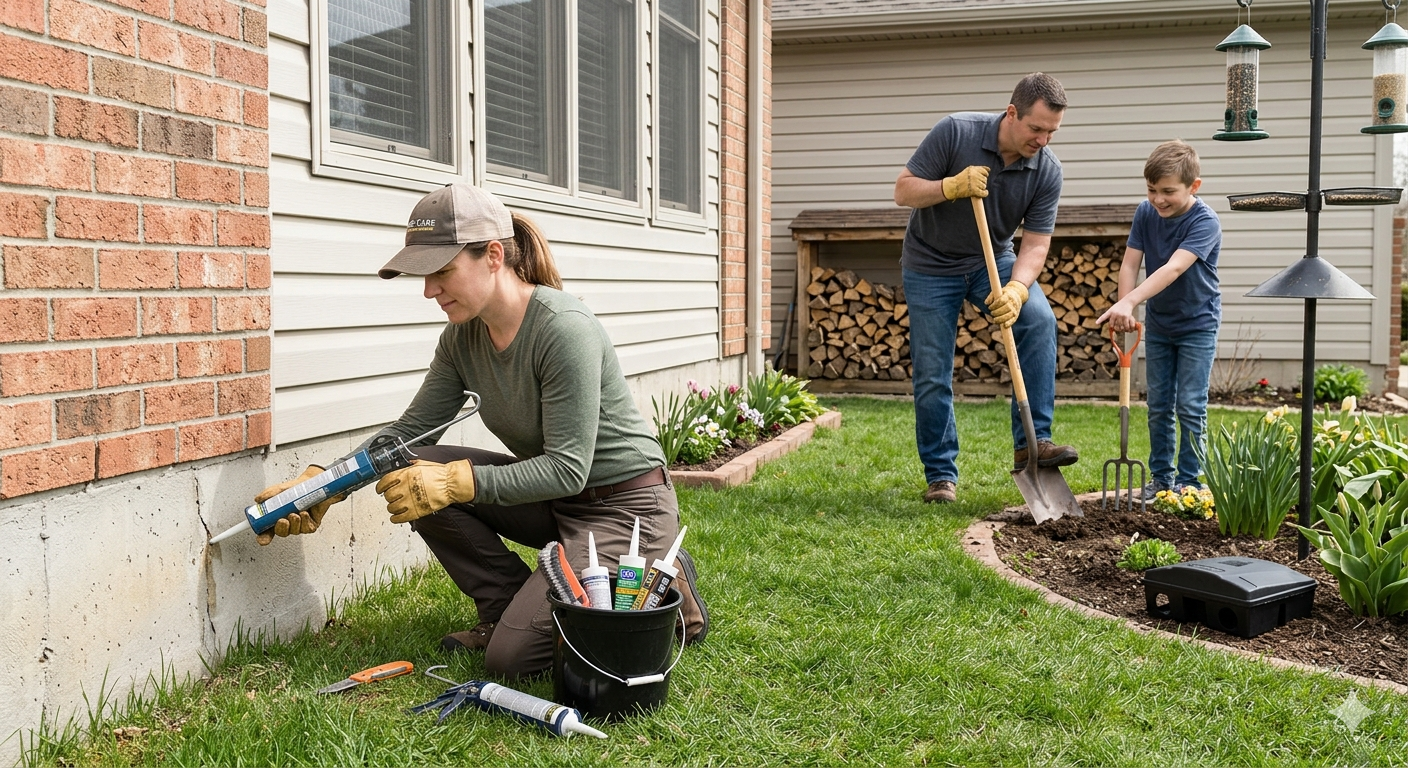
Getting rid of snakes is only half the job. The second half is making sure they do not come back. Sustainable prevention combines habitat management, pest control, and structural exclusion.
- Maintain your property consistently. A tidy yard, regularly trimmed lawn, and clean garden remove the habitat that snakes depend on. Make property maintenance a seasonal habit, especially in spring and late summer when snakes are most active.
- Control rodents year-round. Rodent control is the most powerful long-term snake prevention tool you have. No rodents means no reason for snakes to visit. Set traps, seal food storage, and address any active rodent signs quickly. The Ontario Ministry of the Environment’s integrated pest management guidelines provide solid advice on managing pests within provincial regulations.
- Inspect your home every spring. Winter can open up new cracks in foundations and gaps in door seals. Walk around your home each spring, looking for new entry points and seal them before snake season begins.
- Educate your family. Teach children to leave snakes alone if they spot one and to come and get an adult immediately. Most snake bites in residential settings happen when people try to handle or kill a snake themselves.
When You Should Always Call a Professional
Some situations call for expert help rather than DIY methods. You should contact a licensed pest control professional when:
- You see a snake that you cannot confidently identify
- You find snake eggs or signs of a nest inside or under your home
- Snakes keep returning despite your prevention efforts
- You have confirmed or suspected venomous snake activity
- You find multiple snakes, which often signals a larger infestation tied to a rodent problem
A professional uses safe, humane removal methods, identifies the root cause of the problem (usually a rodent infestation), and gives your property a full exclusion treatment to keep snakes out long-term.
Your Snake Problem Ends Here ; Take Back Your Space Today
Dealing with snakes in and around your home does not have to be stressful. When you take the right steps removing food sources, tidying your property, sealing entry points, and using targeted repellents you take away everything that makes your yard attractive to snakes in the first place.
The good news is that most snake problems are completely solvable. A consistent routine of yard maintenance, rodent control, and structural exclusion is enough to keep the vast majority of snakes away for good. Start with the basics, stay consistent through the warmer months, and your property will become a place snakes simply have no reason to visit.
But when the problem keeps coming back, when you find signs of snakes inside your home, or when you are not sure what species you are dealing with, that is the right time to bring in expert help. A trained pest control technician will identify the root cause, remove the snake safely, and put the right prevention measures in place so the problem does not return.
Do not let a snake take over your yard or home. Reach out to 4K Pest Control today and get your property back.
Frequently Asked Questions About Exterminating Snakes
1. What is the fastest way to remove snakes from my yard?
The fastest approach is to remove their food and shelter all at once — clear debris, cut the grass short, seal compost bins, and set rodent traps at the same time. This takes away both the food source and the hiding spots snakes depend on, forcing them to move elsewhere within days.
2. Is it legal to kill snakes in Ontario?
Most Ontario snake species are protected under provincial wildlife laws, and killing them is illegal without a permit. The Eastern Massasauga Rattlesnake is also federally listed as a threatened species. Always focus on humane removal and exclusion rather than killing snakes.
3. Do snake repellents actually work?
Repellents like sulphur granules, cinnamon oil, and cedar oil do discourage snakes when used correctly, but they work best alongside habitat removal. Repellents alone will not solve a serious snake problem if food and shelter are still available on your property.
4. How do I know if there is a snake nest in my home?
Look for shed snake skins, small oval droppings with a white tip, and a musty odour in basements or crawl spaces. Seeing multiple snakes in a short period is also a strong sign of a nearby nest. A pest control professional can confirm and safely address a nest.
5. Can snakes in Bradford hurt my pets?
Most snakes in Bradford are non-venomous and pose little real danger to dogs and cats. However, a curious pet that corners or mouths a snake can receive a defensive bite. Cats and small dogs are at slightly higher risk. Keep pets supervised in areas where you have seen snake activity.
6. What time of year are snakes most active in Bradford?
Snakes in Bradford are most active from late April through early October. Peak activity occurs in May, June, and July when temperatures are warm. They also move frequently in September as they search for overwintering spots, which is when they most often try to enter homes.