


You wake up with small, itchy red marks on your arms. You tell yourself it was the mosquito you heard last night. But the next morning, more bites appear, and they’re in a neat little row.
That’s usually when people start Googling. And that’s usually when they wish they had called a pest control service for bed bugs a lot sooner.
Bed bug infestations in Canada are more common than most people want to admit, and ignoring early warning signs is exactly how a small problem turns into a full-blown nightmare.
Bed bugs are incredibly good at hiding, shockingly fast at spreading, and almost impossible to eliminate without professional help.
If you’ve noticed something suspicious in your home, this guide will walk you through exactly what to look for, so you can act fast. And acting fast is everything.
What Are Bed Bugs, Exactly?
The common bed bug, scientifically known as Cimex lectularius, is a small, reddish-brown, flat-bodied insect about the size of an apple seed (4–5 mm). It’s a blood-feeding insect, meaning its only food source is blood, from humans or pets.
They are nocturnal pests. During the day, they hide in dark crevices, and at night, attracted by your body heat and the carbon dioxide you exhale, they come out to feed. A single feed lasts 3 to 10 minutes. Then they disappear back into hiding.
The biggest misconception? That only dirty homes get them. Bed bugs don’t care how clean your home is; all they need is blood. A five-star hotel, a spotless apartment, a tidy family home, nobody is immune.
Here’s the tricky part: a single female bed bug can lay 200-500 eggs in her lifespan. Under ideal indoor temperatures (21–31°C), a population can double every 16 days. This is not a pest that waits around.
The Impact Goes Beyond the Physical
This part often doesn’t get talked about enough. Psychological impact is very real. It gets more expensive, more disruptive, and emotionally harder.
Nobody should have to live like that. And you don’t have to.
Canadian residents spend up to $90 per month on over-the-counter insecticides trying to manage infestations themselves, without success, as the problem worsens over the years. That’s money spent for no result, on top of the psychological impact of never feeling safe in your own bed.
The Warning Signs You Absolutely Cannot Ignore
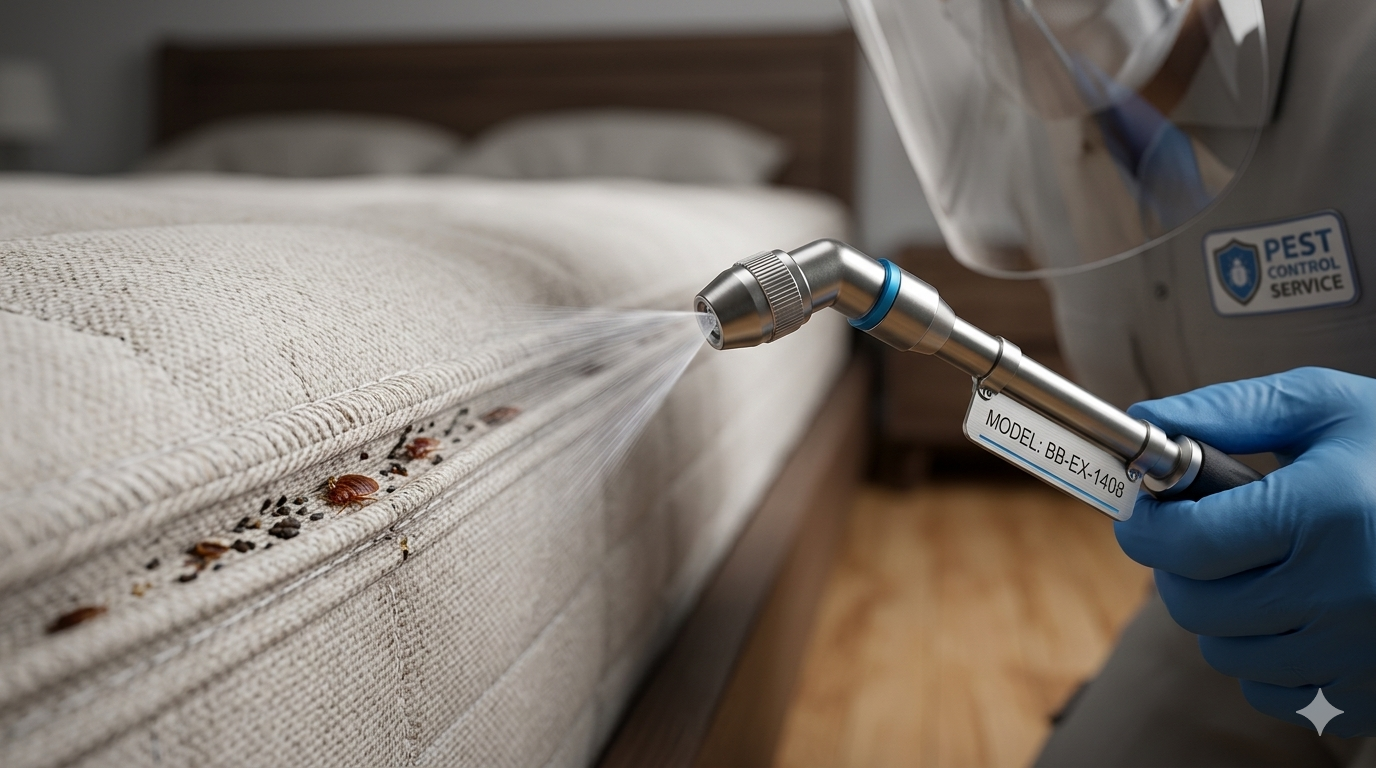
Most people don’t realise they have a bed bug infestation until it’s already spread. Almost 92% of people only realise they have bed bugs after noticing bites or skin reactions, by which point the infestation severity is often already significant. Here are the red flags you must look for:
1: You’ve Seen One Bug
This might seem obvious, but it’s worth saying clearly: if you’ve actually seen a live bed bug, call a pest control service for bed bugs immediately. Do not wait to see if more bed bugs appear. The bug you saw is almost certainly not alone.
Where to check right now:
- Mattress seams: pull the edge of the fabric and look for brown specks, shed skins, or live insects
- Box spring: flip it over and inspect the underside closely
- Bed frame cracks and headboard: use a flashlight along every groove and joint
- Baseboards, especially where the floor meets the wall closest to the bed
- Nightstands and bedside furniture, particularly in drawers and on the bottom edges
2: You’ve Got Mystery Bites
Waking up with itchy, red marks is the most common reason people start suspecting bed bug bites. The challenge is that bed bug bites vs mosquito bites can look nearly identical; both cause red welts and itching.
Signs it might be bed bugs rather than something else:
- Bites appear in a row or cluster, sometimes called the breakfast, lunch, dinner pattern
- Bites are only on exposed skin (arms, shoulders, neck, face)
- Bites get worse over multiple nights in a row
- No other obvious cause, such as no mosquitoes, no pets with fleas
Bed bug bites can take up to two weeks to develop visible reactions on some skin types, while others react within an hour. So bites appearing suddenly after sleeping somewhere new, like a hotel room, are a strong signal to check your luggage immediately before unpacking at home.
3: You Can Smell Something Sweet and Musty
This one catches people off guard. A large bed bug infestation has a distinct musty odour often described as sweet and unpleasant, similar to coriander or almonds. If your bedroom suddenly has an unexplained smell that doesn’t go away with cleaning, that’s worth investigating seriously.
Small infestations typically don’t produce this odour, so if you can smell it, the infestation is already significant.
4: You’ve Just Returned From Travel
Bed bugs are outstanding hitchhikers. Hotels, motels, hostels, Airbnbs, public transport, taxis, all common bed bug hiding spots that allow the pests to move from location to location undetected.
After any trip, take these steps before unpacking:
- Inspect your luggage carefully, especially seams, pockets, and wheels, before bringing it inside
- Wash all clothing from the trip in hot water (60°C+) immediately
- Store luggage in the garage or a sealed bag rather than the bedroom, at least initially
- Check the hotel mattress on your next stay, pull back the sheets and check the mattress seams before you sleep
If you find anything suspicious after travel, contact a licensed exterminator right away. Early bed bug detection at this stage is the easiest and least expensive time to deal with it.
5: You’ve Tried DIY, and It Hasn’t Worked
Maybe you already bought a spray or two. Maybe you washed all your bedding and vacuumed thoroughly. And yet the bites are still happening, or you’re still finding evidence of bugs.
This is the clearest sign that it’s time for a professional pest control service for bed bugs. DIY approaches fail for a simple reason: they rarely reach all harborage areas, and they rarely eliminate eggs. Without addressing the full life cycle stages of the infestation, you’re just slowing it down, not stopping it.
A professional brings:
- Heat treatment equipment that reaches temperatures lethal to eggs and adults
- Canine detection to locate bugs hidden deep in walls or flooring
- Integrated pest management (IPM), that is a multi-method approach that addresses every stage of the infestation
- Health Canada-approved (PCP-registered) insecticides applied correctly and safely
- Follow-up treatment to confirm complete elimination
6: You Live in a Multi-Unit Building
If you’re in an apartment, condo, or shared housing, this matters even more. Bed bug infestations spread between units through shared walls, electrical conduits, plumbing channels, and hallways. If you have bugs, there’s a good chance neighbouring units either already have them or will soon.
In these situations, a pest control service for bed bugs should ideally be coordinated across affected units. Treating just your apartment without addressing the source or adjacent units almost guarantees re-infestation.
If you’re a tenant, notify your landlord in writing immediately. Under most Canadian provincial tenancy laws, the landlord is responsible for arranging professional bed bug removal in rental properties.
DIY vs. Professional Pest Control Service for Bed Bugs: The Honest Truth
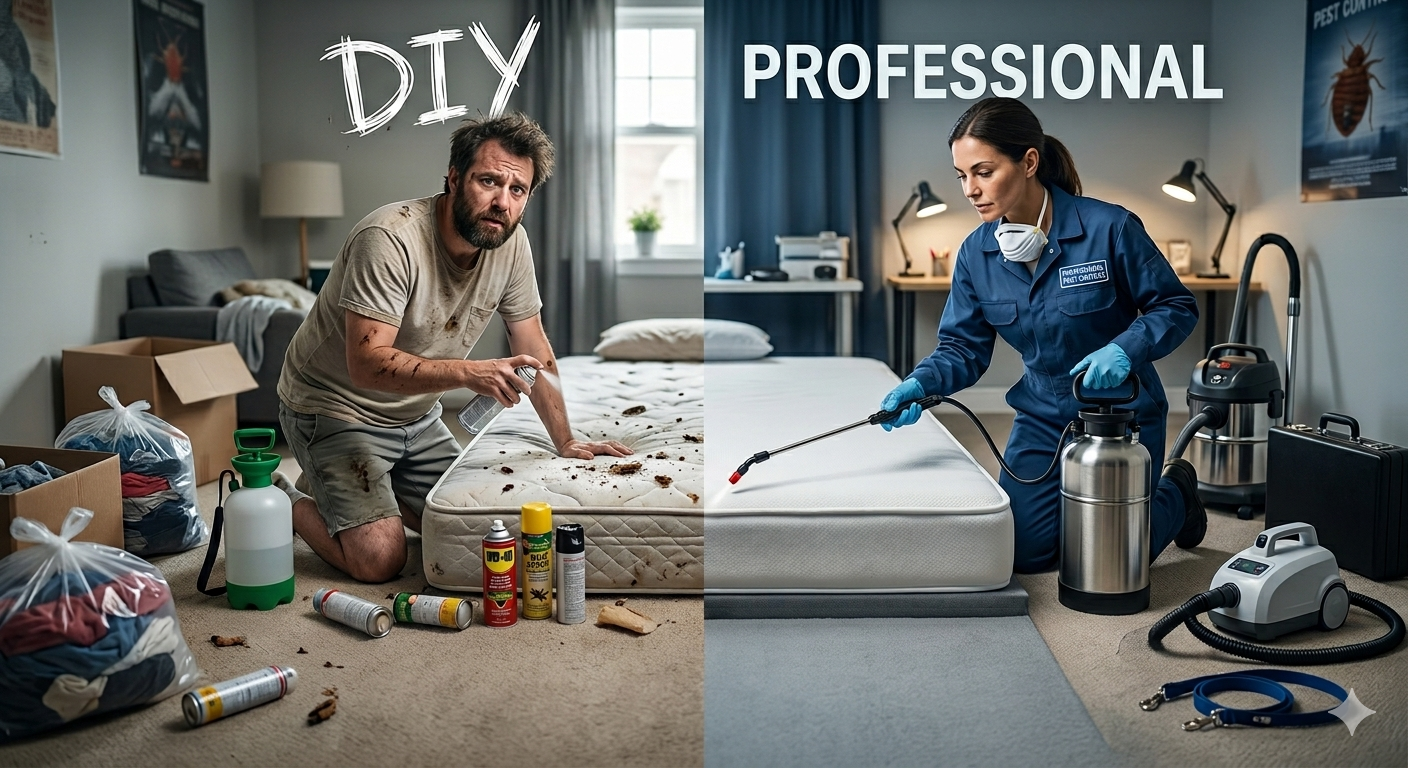
Here’s where a lot of Canadians go wrong. They spot a bug or two, buy a spray from the hardware store, and assume the problem is handled. It rarely is.
Over-the-counter bed bug spray products rarely penetrate deep into harborage areas where eggs and nymphs are hiding. And because insecticide resistance in bed bugs has been well-documented, even stronger chemical applications may not work without professional knowledge of application technique.
What a pest control service for bed bugs can do that you simply can’t do on your own:
- Heat treatment, raising the room temperature above 50°C, kills bugs at all life cycle stages, including eggs
- Integrated pest management (IPM), a science-backed, multi-step approach combining inspection, treatment, and prevention
- Residual pesticide applications using Health Canada-registered (PCP-registered) products
- Follow-up visits to confirm elimination
When Should You Actually Call a Professional?
Honestly? As soon as you suspect something. Early bed bug detection is the single biggest factor in how fast and affordable treatment will be. The longer you wait:
- The more rooms the infestation spreads to
- The harder and costlier bed bug extermination becomes
- The greater the risk to neighbours in multi-unit dwellings or apartments
- The more likely re-infestation prevention requires multiple follow-up treatments
Bed bug infestations don’t self-resolve. These parasites can survive for months without a blood meal. Waiting, hoping they go away, just gives them more time to breed.
How Bed Bugs Get Into Your Home And How to Stop Them
Knowing how bed bugs travel helps you prevent them from coming back after treatment. The most common ways these pests enter a property:
Travel: Bed bugs in hotels are surprisingly common. They hide in mattress seams, headboards, and upholstered chairs, then hitchhike in your luggage.
Second-hand furniture: A used sofa or bed frame can harbour an active infestation. Always check second-hand furniture carefully before moving it inside.
Visiting infested spaces: Someone else’s home, a shelter, or even public transit. Bed bugs are efficient hitchhikers and can travel on clothing and luggage.
Multi-unit buildings: Bed bugs can move through walls and shared spaces in apartments and condos. An infestation in a neighbouring unit can become your problem quickly.
Simple prevention habits that actually help:
- Never put luggage directly on a hotel bed; use the metal luggage rack
- Vacuum your suitcase after returning from travel
- Wash and dry all clothes from your trip right away on high heat
- Declutter your home to reduce hiding spots
- Use a bed bug-proof cover (encasement) on your mattress as a precaution
- Inspect furniture thoroughly before bringing it home
- Seal cracks in baseboards and walls to limit entry points
The Bottom Line: Don’t Wait
The single biggest mistake homeowners make with bed bugs is waiting. Every week of delay is another week of rapid reproduction, spreading to more rooms, and potentially spreading to neighbours. The cost of treating a small, early-stage infestation is a fraction of what it takes to address a whole-home outbreak.
If you’re seeing any of the warning signs above, or even if you’re just not sure, the smartest move is to get a professional bed bug inspection done. A trained licensed exterminator will confirm what you’re dealing with and lay out a clear, honest plan.
At 4K Pest Control, we offer professional pest control service for bed bugs across Bradford and Toronto, using approved methods. If something feels off in your home, don’t wait; get in touch today and let’s figure it out together.
People Also Ask About These Queries
Do I throw away my mattress if I have bed bugs?
Throwing away your mattress is usually unnecessary and won’t solve the problem, since bed bugs live in walls, furniture, and baseboards too. A professional exterminator combined with a quality mattress encasement is far more effective and cost-efficient than replacement.
Does washing clothes kill bed bugs?
Yes, washing clothes in hot water at 60°C or higher and drying on high heat for at least 30 minutes effectively kills bed bugs at all life stages, including eggs. This is one of the most reliable DIY steps, especially after travel.
What brings bed bugs out of hiding?
Bed bugs are drawn out by body heat, carbon dioxide from breathing, and the warmth of a sleeping person. They typically emerge at night when hosts are still. Lure-based monitors and professional heat treatments exploit these behaviours to detect and eliminate them.
Do bed bugs spread disease?
These pests are not known to spread diseases to humans. However, their bites can cause allergic reactions, skin infections from scratching, significant sleep disruption, anxiety, and depression. The psychological and physical toll of a prolonged infestation is well documented by health researchers.
Is pest control safe for humans?
Licensed pest control professionals like 4K Pest Control use Health Canada-approved products applied at regulated concentrations, making treatments safe when instructions are followed. Residents typically need to vacate during treatment and return after ventilation. Always disclose health conditions, pregnancies, or allergies to your exterminator beforehand.
Can bed bugs infest the whole house?
Yes. Without prompt treatment, bed bugs spread from bedrooms to living rooms, sofas, clothing, and even adjacent rooms through walls and electrical conduits. In multi-unit buildings, they can move between apartments. Early detection and professional intervention prevent whole-home or building-wide infestations.
How long can they survive without feeding?
Bed bugs can survive anywhere from several months to over a year without a blood meal, depending on temperature and life stage. This makes vacating your home or simply waiting them out completely ineffective. Professional treatment is the only reliable way to break their survival cycle.
Can clean homes get bed bugs?
Absolutely. Bed bugs are not attracted to dirt or filth; they only need blood. Five-star hotels, spotless apartments, and well-maintained family homes are just as vulnerable as any other space. Cleanliness reduces hiding spots but does not prevent or eliminate an infestation on its own.
How fast do bed bugs reproduce?
A single female bed bug lays one to three eggs daily and up to 500 in her lifetime. Under ideal indoor temperatures between 21 and 31°C, a population can double approximately every 16 days. This rapid reproduction rate is exactly why early professional intervention is so critical.
Do ozone generators work for bed bugs?
Ozone generators are not a proven or recommended treatment for bed bugs. While high ozone concentrations can be toxic to insects, achieving lethal levels safely inside a home is extremely difficult and potentially dangerous to humans and pets. Professional heat or chemical treatments remain the gold standard.
Do bed bug home remedies work?
Home remedies like baking soda, essential oils, or rubbing alcohol offer little to no proven effectiveness against bed bugs. They may kill a bug on contact, but they won’t reach hidden eggs or nymphs. Professional treatment using heat or integrated pest management is the only reliable solution.