


How to Prevent Bed Bugs: 12 Steps That Actually Work
The most effective bed bug prevention combines three habits: isolating luggage and secondhand items before they reach your bedroom, running anything washable through a hot dryer cycle, and inspecting seams and folds after travel or overnight guests. No single step guarantees protection, but consistently doing all three closes off the routes bed bugs actually use to get in.
4K Pest Control provides licensed bed bug treatment across Bradford, Newmarket and the GTA.
Bed bugs don’t fly, jump, or infest a home on their own, they travel in on something, almost always carried in by luggage, used furniture, or clothing. That’s actually good news, because it means prevention is less about the house and more about controlling what comes into it. Here are 12 concrete steps, grouped by the situations that actually cause most infestations.
After travel
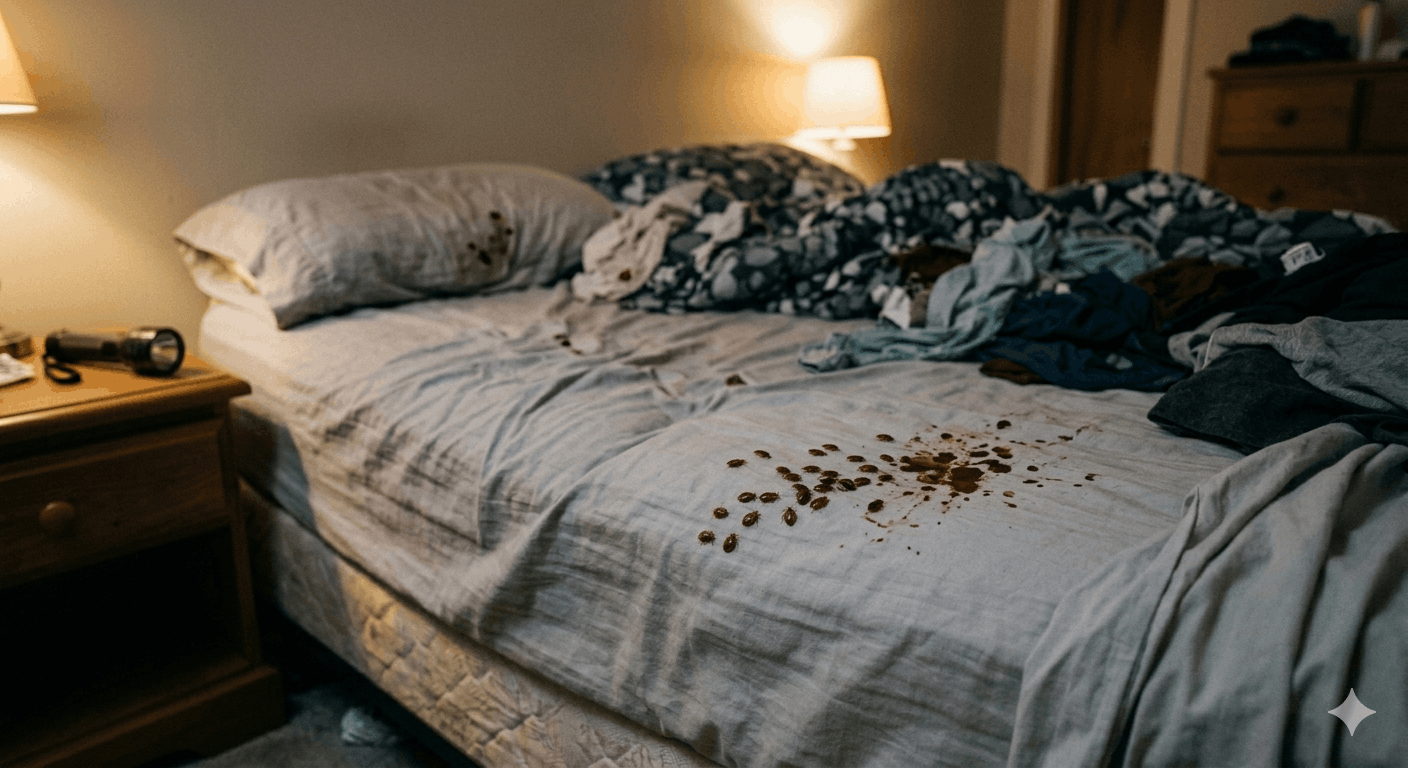
- Don’t put luggage on the bed or floor of the bedroom. Bed bugs travel in luggage far more often than people expect, picked up from a previous room, a shared taxi, or a train seat. Keep suitcases on a luggage rack away from soft furnishings until they’ve been checked, ideally in an entryway or garage rather than the bedroom.
- Inspect hotel and rental rooms before unpacking, if you can. Check the mattress seams, the headboard, and the join where the mattress meets the box spring — those are the spots bed bugs favour, since they stay close to where a host sleeps for long, still periods. This isn’t practical every time, but it’s worth 60 seconds when you can manage it.
- Run washable items through a hot dryer cycle as soon as you’re home. Heat is genuinely effective here — a dryer cycle at high heat for around 30 minutes kills bed bugs at every life stage, including eggs. This matters more than washing alone; the dryer’s heat is doing the work, not the detergent.
- Vacuum the suitcase itself, then seal it away. Bed bugs can ride in the seams and pockets of a suitcase without ever touching the clothes inside. A thorough vacuum of the interior, followed by storing the case somewhere other than the bedroom closet, closes that gap.
Secondhand furniture and mattresses
- Inspect any secondhand furniture before it enters the house, not after. Mattresses, box springs, upholstered chairs, and headboards are the highest-risk secondhand items, because bed bugs live directly in the seams and frame joints of exactly this kind of furniture. Check before it crosses the threshold, not once it’s already in the bedroom.
- Be especially cautious with anything picked up from a curb or a move-out situation. Free furniture left outside is one of the more common ways an infestation starts, precisely because there’s no way to know why it was put out.
- Use a mattress and box spring encasement as ongoing prevention, not just treatment. A proper encasement, rated specifically for bed bugs, seals off the seams where they’re most likely to hide and makes early detection considerably easier, since there’s nowhere for them to disappear into.
Guests and shared laundry
- Be mindful around overnight guests, without making it awkward. You can’t inspect a guest’s belongings, but a reasonable habit is keeping guest bags off the bed and offering a spot away from soft furnishings for them to store luggage during their stay.
- Be careful with shared or communal laundry facilities. Carry clothes in a sealed bag rather than an open basket, and transfer straight from dryer to a clean bag rather than resting items on a shared folding surface, which can carry bugs from someone else’s load.
- If you live in a multi-unit building, treat shared walls as a real risk factor. Bed bugs move between adjoining units through wall voids, shared electrical outlets, and baseboards more often than people realize. If a neighbouring unit has a known infestation, it’s worth being more vigilant, and worth raising with property management — under Section 20 of Ontario’s Residential Tenancies Act, addressing pest issues in a rental is the landlord’s responsibility, and that includes taking building-wide reports seriously rather than treating each unit as isolated.
If you suspect exposure but see no signs yet
- Do a targeted check rather than a full-room search. After a trip, a secondhand purchase, or a stay somewhere you’re unsure about, check the specific high-risk spots — mattress seams, the piping along the edge of cushions, the join at the headboard — rather than searching randomly. This is where early activity actually shows up.
- Don’t spray “just in case.” It’s tempting to treat proactively with a store-bought spray, but most retail products are designed for contact killing on direct exposure, not prevention, and using them without a confirmed infestation can scatter a small, early population into wall voids or neighbouring rooms — making a manageable problem considerably harder to treat if one does develop. If you’re genuinely worried after a specific exposure, a professional inspection is a better next step than pre-emptive spraying.
Catching a bed bug problem early gives you the best chance of handling it quickly and affordably. For a deeper look, check out our guide on bed bug warning signs you shouldn’t ignore.
The 12 steps at a glance
|
# |
Step |
When it matters most |
|---|---|---|
|
1 |
Keep luggage off the bed and floor |
Every trip |
|
2 |
Inspect hotel/rental rooms before unpacking |
Travel |
|
3 |
Hot dryer cycle on washables, ~30 minutes |
Every trip |
|
4 |
Vacuum and store the suitcase away from the bedroom |
Every trip |
|
5 |
Inspect secondhand furniture before it enters |
Buying/receiving furniture |
|
6 |
Extra caution with curb-found or move-out furniture |
Free/found furniture |
|
7 |
Use a bed bug–rated mattress/box spring encasement |
Ongoing prevention |
|
8 |
Keep guest luggage off soft furnishings |
Overnight guests |
|
9 |
Carry laundry sealed, avoid shared folding surfaces |
Communal laundry |
|
10 |
Treat shared-wall risk seriously in multi-unit buildings |
Apartments/condos |
|
11 |
Check specific high-risk spots after possible exposure |
Any suspected exposure |
|
12 |
Don’t spray preventively without a confirmed problem |
Any suspected exposure |
Frequently asked questions
Can bed bugs be fully prevented? Not with absolute certainty, they travel in from outside sources, and no home is completely immune. What these steps do is close off the most common routes in and make early detection much more likely, which matters because bed bugs are considerably easier to deal with caught early than after they’ve spread through a room.
Does washing clothes in hot water kill bed bugs? Washing helps, but it’s the dryer’s heat that does most of the work. A hot dryer cycle of around 30 minutes is effective against bed bugs at all life stages, including eggs, which is why the drying step matters as much as the wash itself.
Is it safe to buy secondhand mattresses at all? It carries meaningfully more risk than other secondhand furniture, since mattresses and box springs are exactly where bed bugs prefer to live. If you do go this route, a thorough seam-by-seam inspection before it enters the home is worth the extra ten minutes, and a bed bug–rated encasement afterward adds a real layer of protection.
Can bed bugs come from a neighbour’s apartment? Yes, they move through wall voids, shared electrical outlets, and along baseboards between adjoining units more easily than most people expect. In a multi-unit building, an infestation in one unit is a legitimate concern for neighbouring units too, not just the one directly affected.
Do bed bugs spread disease? No, unlike some other pests, bed bugs aren’t known to transmit disease. The impact is more about sleep disruption, skin reactions to bites, and the practical difficulty of eliminating an established infestation, rather than a health transmission risk.
What should I do if I follow all these steps and still find signs of bed bugs? Stop and get it looked at properly rather than trying to treat it yourself. Early-stage bed bug problems are considerably easier to resolve than established ones, and a DIY spray attempt can scatter a small, contained population into a larger area of the home.
Already seeing possible signs and not sure if it’s really bed bugs? A dedicated signs-and-identification guide is coming soon, in the meantime, if you’ve found anything that concerns you, it’s worth getting it confirmed rather than guessing. For inspection or treatment anywhere in Bradford, Newmarket, or the GTA, 4K Pest Control offers licensed bed bug treatment, including heat treatment and a full preparation checklist, call (437) 908-4614 for a free assessment.