


Living With Rats in Your Home Is Exhausting: Professional Rats Pest Control Gives You Real Peace of Mind Today
Hearing something large moving inside your walls at night is a different kind of dread. Rats are not quiet, and they are not harmless. They chew through wires, spread dangerous diseases, contaminate your food, and breed at a pace that turns a small problem into a serious infestation within weeks. If you suspect rats are sharing your home, professional rats pest control is not an overreaction. It is the only response that actually works.
Why Rats Enter Your Home in the First Place
Rats do not choose your home randomly. They come in because your property offers exactly what they need: food, water, warmth, and shelter. They are intelligent, cautious animals that scout locations carefully before settling in. Once they find a reliable food source and a safe nesting spot, they communicate that to the rest of the group, and the population grows quickly.
Common reasons rats enter homes include:
- Unsealed gaps in the foundation, walls, or roof
- Overflowing or unsecured garbage bins outside
- Pet food left out overnight
- Cluttered basements, garages, or storage areas that provide nesting cover
- A dripping pipe or a small patch of standing water around the property
- Overgrown vegetation or woodpiles close to the exterior walls
Understanding why they came in is part of how professional rats pest control keeps them from coming back.
Warning Signs You Have a Rat Problem Right Now
Rats are nocturnal and deliberately avoid contact with humans, so many homeowners do not realize the extent of the problem until the infestation is well established. Knowing what to look for helps you catch it early.
Watch for these signs:
- Loud scratching, gnawing, or thumping sounds inside walls or ceilings at night
- Dark droppings roughly the size of an olive pit near food sources, along walls, or in cupboards
- Greasy rub marks along baseboards and walls where rats travel the same path repeatedly
- Gnaw marks on food packaging, wood, plastic pipes, or electrical cables
- Nests made from shredded paper, fabric, or insulation are tucked into dark corners
- A strong ammonia-like smell in enclosed areas, such as under sinks or inside cupboards
- Burrows or tunnel entrances along the exterior foundation or in the garden
According to Health Canada, damaged food packaging and gnaw marks inside the home are clear indicators of a rodent infestation that requires prompt attention.
The Serious Damage Rats Cause Inside Your Home
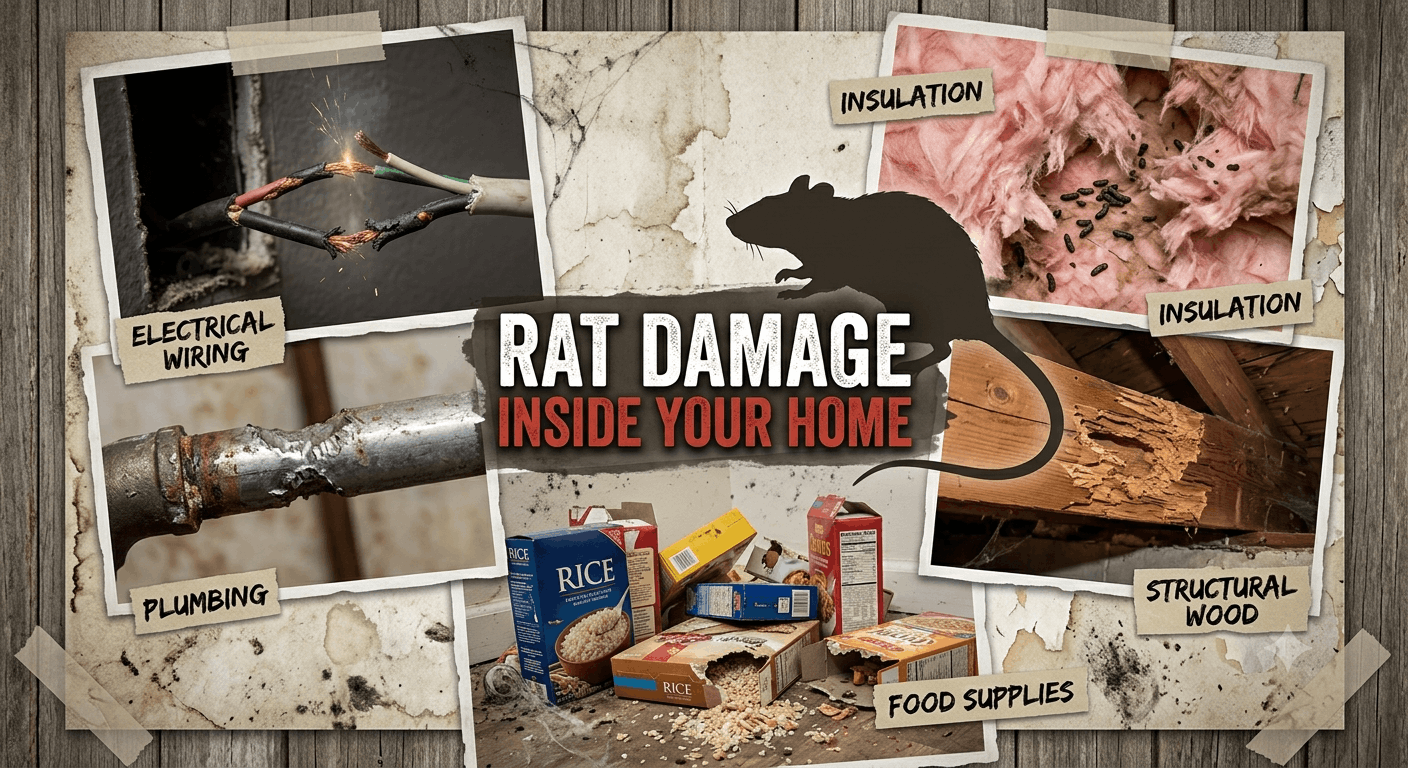
Rats do not simply take up space. They actively damage your property every single day they remain inside. Because they must constantly gnaw to keep their teeth from overgrowing, nothing in their path is safe.
Here is what rats destroy:
- Electrical wiring: Gnawed wires are a leading cause of house fires and are invisible inside walls until the damage is done
- Plumbing: Rats chew through plastic pipes, causing leaks, water damage, and mould growth
- Insulation: Rats nest in insulation and contaminate it with urine and droppings, reducing effectiveness and creating health hazards
- Structural wood: Continuous gnawing weakens floor joists, wall studs, and roof supports over time
- Food supplies: Rats contaminate far more food than they actually consume through droppings, urine, and fur contact
The electrical damage is the most urgent concern. A chewed wire inside a wall can ignite surrounding materials and start a fire without any warning. This is why rats pest control is a home safety issue first and a pest issue second.
The Health Risks Rats Bring Into Your Home
Rats are among the most disease-carrying pests that can enter a Canadian home. They do not need direct contact with your family to cause illness. Simply moving through your kitchen or across your countertops leaves behind contamination that puts everyone at risk.
Rats carry a range of serious diseases that put your entire household at risk:
- Leptospirosis: Spread through rat urine and can cause serious kidney and liver damage in humans
- Hantavirus: Carried by certain rat species and spread through droppings, urine, and saliva
- Salmonellosis: Rats contaminate food and preparation surfaces with bacteria from their droppings
- Rat bite fever: Transmitted through bites or scratches from infected rats
- Secondary pests: Rats carry fleas, ticks, and mites into your home, adding further infestation risk
Children, elderly family members, and anyone with a weakened immune system face the greatest risk. The health case for professional rats pest control is as strong as the property damage case.
Why Store-Bought Solutions Keep Failing You
Poison blocks from the hardware store and basic snap traps feel like practical first steps. For a single stray rat, they might help. For an active infestation, they address almost nothing.
Here is why DIY rat control falls short every time:
- Snap traps only catch rats that directly trigger them, while the rest of the population remains active
- Poison bait creates serious risks when pets or children access treated areas
- Rats that consume poison and die inside walls create persistent decomposition odours
- Store-bought products do not identify or seal the entry points, letting new rats in
- Rats are naturally suspicious of new objects in their environment and often avoid traps entirely for days or weeks
The real problem is that DIY methods treat the symptom, not the cause. Without locating the nest, identifying all entry points, and sealing them permanently, rats will keep returning, no matter how many traps you set.
What Professional Rats Pest Control Actually Involves
Professional rats pest control is a structured process built around eliminating the entire infestation and preventing it from returning. It does not begin with bait. It begins with a thorough understanding of the problem.
A professional service includes:
- A full inspection of the interior and exterior to locate nests, active runways, and all entry points
- Species identification to confirm whether Norway rats, roof rats, or another species is present
- A targeted treatment plan using commercial-grade bait stations, snap traps, or tracking powder, depending on the situation. For a full breakdown of how these methods work and when each is used, see our guide on rat exterminator methods explained.
- Complete exclusion work sealing every entry point with materials rats cannot chew through, including steel wool, metal flashing, and concrete filler
- Sanitization guidance for areas contaminated with droppings and urine
- Scheduled follow-up visits to monitor activity and confirm the infestation is fully resolved
The exclusion work is what separates professional treatment from everything else. Sealing every entry point means the treated population cannot be replaced by new rats moving in from outside.
Keeping Rats Out for Good After Treatment
Professional treatment clears the infestation, but long-term protection comes from maintaining your property in a way that makes it unattractive to rats in the future.
These habits make a real difference:
- Store all food, including pet food, in sealed metal or glass containers
- Secure garbage bins with tight-fitting lids and keep them away from the house
- Fix leaking pipes and eliminate any standing water around the property
- Keep your basement, garage, and storage areas free of clutter and cardboard
- Trim vegetation and keep woodpiles raised and away from exterior walls
- Inspect your foundation, roofline, and vents annually for new gaps or damage
Pairing these habits with an annual professional inspection gives your home the strongest possible protection against a repeat infestation.
You Deserve a Home That Feels Safe Again
The dread of hearing rats at night, worrying about what they are chewing through, and feeling uncomfortable in your own space takes a real toll. You should not have to live like that. Professional rats pest control removes not just the rats but the constant stress and worry that comes with them.
A thorough removal service locates every nest, seals every entry point, and follows up to make sure the problem is completely gone. If rats have been making your home feel unsafe, today is the right day to take it back.
Contact 4K Pest Control at 4kpestcontrol.ca and book your professional inspection today.
Frequently Asked Questions About Rats Pest Control
Q1. How do I know if I have rats or mice in my home?
Rats are significantly larger than mice and leave much bigger droppings, roughly the size of an olive pit, compared to the rice-sized droppings mice leave. Rat sounds are also heavier and louder, more like thumping and dragging than the light scurrying mice produce. A professional inspection will confirm the species before any treatment begins.
Q2. How fast do rats multiply inside a home?
Very quickly. A female rat can produce up to five litters per year with six to twelve pups in each litter. Pups reach reproductive maturity in as little as five weeks. A small group of rats can grow into a large infestation within a single season, which is why acting at the first sign is always the right move.
Q3. Can rats come back after professional treatment?
They can if entry points are not properly sealed. This is why exclusion work is the most critical part of any rats pest control service. A reputable provider will seal every identified entry point and schedule follow-up visits to confirm no new activity. Many also offer a re-treatment guarantee within a set period after service.
Q4. Are the products used in professional rat control safe for my family and pets?
Yes, when applied by a licensed technician. Professional treatments use targeted placement methods that keep products away from areas your family accesses. You may be asked to stay out of treated areas briefly, but modern professional products are applied strategically to minimize any household exposure.
Q5. Do rats only live in dirty or old homes?
No. Rats enter any home that offers food, water, and shelter, regardless of how clean or new it is. A single gap in your foundation or an unsecured garbage bin is enough to attract them. Cleanliness helps reduce attractants but does not make a home immune, especially if structural gaps exist.
Q6. How do I know the rats are completely gone after treatment?
Your technician will conduct follow-up visits to check bait stations and traps, look for fresh droppings, and confirm no new activity. No new sounds at night, no fresh droppings, and no new gnaw marks are strong indicators that the treatment has worked. A professional will not close the job until the infestation is fully resolved.