


You stepped outside to enjoy your backyard on a warm summer evening, and within minutes, you’re retreating indoors. Mosquitoes have a way of ruining a perfectly good moment. It doesn’t have to be this way forever.
You may think you’ve cleared the birdbath, emptied the buckets and even drilled holes in that old planter. And yet, mosquitoes are still everywhere.
Here’s what most homeowners miss: mosquitoes don’t need a pond to breed. They need a bottle cap. A single female mosquito can lay between 100 and 400 eggs in just a teaspoon of standing water, and the mosquito life cycle from egg to biting adult completes within ten days under the right conditions.
This guide covers everything you need to know about mosquito pest control, from why mosquitoes target your yard to the most effective treatments available. No fluff, no guesswork.
Why Mosquitoes Are Far More Dangerous Than You Think
Most people see mosquitoes as just an annoyance. But the reality is different and a lot more serious.
According to the World Health Organization (WHO), vector-borne diseases cause over 700,000 deaths annually, with mosquitoes responsible for a significant share.
And that number keeps climbing. In 2024 alone, 14.1 million dengue cases were reported globally, a 12-fold rise compared to 2014, with nearly 9,500 deaths recorded.
Mosquitoes transmit 28 known diseases, including:
- West Nile virus, the most common mosquito-borne disease in North America
- The Zika virus can harm pregnant women
- Dengue fever, the fastest-spreading mosquito-borne illness worldwide
- Malaria is still responsible for over 597,000 deaths per year
- Eastern Equine Encephalitis (EEE) is rare but carries a 30% fatality rate
To learn more about which specific mosquito species carry these diseases in Canada, read our guide on Types of Mosquitoes Near Your Home.
This isn’t meant to scare you. It’s meant to make clear why effective mosquito pest control matters for every property, every season.
How to Tell If You Have a Mosquito Problem (Beyond the Obvious)
So, you’re getting bitten. But here’s how to spot a genuine infestation versus a random few that wandered in:
- You notice mosquito activity even during the day, not just dusk and dawn
- There’s standing water on your property that hasn’t been cleared in over a week
- Your yard has dense overgrown vegetation or thick shrubbery
- You hear a constant high-pitched buzz near birdbaths, gutters, or flower pots
- Bites are happening indoors, suggesting entry through damaged window screens
If two or more of these apply to you, it’s time to act, not just swat.
Where Mosquitoes Actually Breed on Your Property
This is the most important thing to understand about mosquito pest control: you can’t just target the adult mosquitoes. You have to locate the source.
Female mosquitoes lay between 100 and 400 eggs at a time, and they only need a small amount of standing water to do it. The mosquito life cycle from egg to adult can be completed within days in temperatures between 22°C and 27°C.
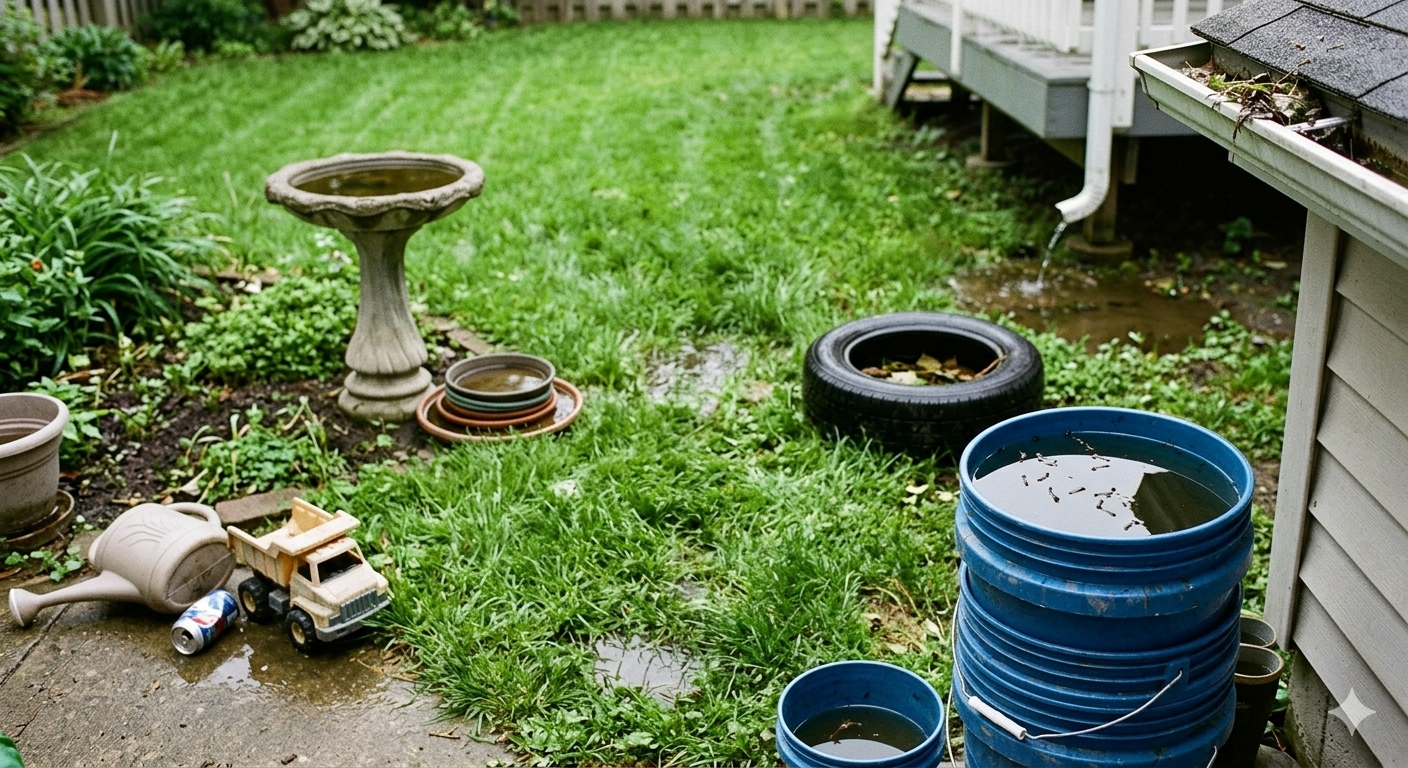
Common mosquito breeding grounds on residential and commercial properties are often closer than you think. Clogged gutters, birdbaths, pet water bowls, old tires, buckets, and wheelbarrows all collect standing water quickly.
Ornamental ponds, rain barrels, potted plant saucers, and pool covers are equally problematic if left unchecked. Low-lying spots that hold drainage after rain are the hardest to spot but just as dangerous.
The fix? Remove the water source. No water, no mosquito larvae, no adult population. Emptying, treating, or storing these correctly is the first and most important step in keeping mosquitoes away from your property.
Your Full Mosquito Prevention Checklist
Prevention is always cheaper than treatment. Here’s what to do before you ever call in a professional:
Around the yard:
- Empty and clean all containers that collect water weekly
- Keep grass trimmed and prune back overgrown vegetation
- Aerate decorative ponds or stock them with mosquito-eating fish like Gambusia
- Clean gutters at the start of each season
For the home:
- Fix window screens and install door sweeps
- Seal cracks around doors and windows
- Use mosquito netting when sleeping outdoors or in unscreened spaces
Personal protection outdoors:
- Apply insect repellents having DEET or oil of lemon eucalyptus to exposed skin
- Wear long pants and sleeves when outdoors during peak mosquito hours
- Reduce activities between dusk and dawn when mosquitoes are most active outside
In Canada, mosquito season typically runs from May to September, so prevention steps should begin in early spring.
Mosquito Control Methods: From DIY to Professional Treatment
DIY Options (Good for Light Infestations)
For minor issues, a few options can help. Mosquito repellent torches and candles take the edge off during backyard gatherings. Meanwhile, mosquito traps using carbon dioxide or UV light can bring down local populations over time. Larvicides are effective against larvae in standing water that can’t be drained, and products with (S)-methoprene or novaluron work in a similar way.
Canadians must use a larvicide with a PCP (Pest Control Product) number on the label, as required by Health Canada regulations. Check the Pesticide Label Database before purchasing.
What Doesn’t Actually Work
Don’t waste money on:
- Bug zappers (electrocutor traps) don’t meaningfully reduce mosquito populations
- Electronic mosquito repellers emit high-frequency sounds with no scientific backing.
- Mosquito coils and lanterns alone. They provide short-term personal relief only, but do not affect breeding.
Professional Mosquito Control (The Real Solution)
When the problem is beyond a DIY fix or when your property has large, inaccessible breeding sites, professional mosquito control is the answer.
Licensed professionals perform yard fogging and misting treatments to quickly knock down adult mosquitoes and apply larvicides directly to standing water before the next generation hatches. Mosquito misting systems keep protection running between visits, and a seasonal treatment plan keeps your yard covered from spring through late summer.
For households that prefer to avoid synthetic chemicals, all-natural treatment options are available as well.
Moreover, professionals inspect your property, identify every breeding ground, and develop a customized plan. They provide something a store-bought spray simply can’t match.
Mosquito Pest Control for Different Property Types
Not all properties have the same challenges. Here’s a quick breakdown:
Residential homes: Focus on gutters, yard drainage, and perimeter barrier sprays. Seasonal plans work best.
Properties near water (ponds, ravines, drainage ditches): Larvicide applications and professional misting systems are essential. Natural water bodies near homes significantly raise mosquito populations.
Commercial properties and event spaces: Special event mosquito treatments are available for one-time outdoor gatherings, weddings, festivals, and corporate events.
Farms and rural properties: Large-area mosquito control programs handle expansive acreage. Also consider tick control treatments, as both pests often share the same habitat.
When to Call a Professional for Mosquito Pest Removal
Ask yourself these questions:
- Have you removed standing water and still have a major mosquito problem?
- Does your property have water features or drainage areas you can’t eliminate?
- Are family members or guests getting bitten indoors?
- Is the mosquito season making your backyard completely unusable?
If you answered yes to any of these, it’s time to bring in a licensed pest control professional. A professional approach targets the problem at every stage of the mosquito life cycle, not just the visible adult population.
Conclusion: Take Back Your Yard This Season
Mosquitoes aren’t just irritating; they’re a genuine health risk. Between West Nile virus, Zika virus, dengue fever, and the other diseases these insects transmit, doing nothing is not an option, especially if you have kids, pets, or outdoor gatherings on your calendar.
The good news? With the right prevention and treatment in place, you can take back your yard, reduce mosquito populations and enjoy the outdoors again.
Looking for professional solutions to get rid of mosquitoes, 4K Pest Control is here to help. We serve both residential and commercial properties with proven mosquito pest control services. You can request a one-time treatment or a full seasonal mosquito control plan based on your property situation. Our team gets the job done safely, on schedule, and without the hassle.
Frequently Asked Questions
Why do mosquitoes bite some people more than others?
Mosquitoes are drawn to carbon dioxide, body heat, and certain skin odors. People who exhale more CO₂ or have particular skin chemistry tend to get bitten more than others nearby. Wearing light-colored clothing and avoiding scented products can also make you a less appealing target.
Can mosquitoes breed in a swimming pool?
Not in a properly maintained one. A chlorinated, circulating pool won’t support breeding. But water pooling on the pool cover absolutely can, so dump it after every rainfall. Even a few days of stagnant water on a cover is enough time for eggs to hatch into larvae.
What is the most effective method of mosquito control?
The most effective approach combines eliminating standing water breeding sites, applying larvicides to water that can’t be drained, and scheduling professional barrier spray treatments throughout mosquito season. Consistency is key: skipping treatments mid-season allows populations to bounce back quickly.
Does removing standing water actually make a difference?
Absolutely. A single female mosquito can lay 100–400 eggs in a bottle cap’s worth of water. Eliminating standing water is the single most impactful DIY step to remove mosquitoes from your property. Check gutters, flowerpot saucers, and tarps regularly, as these are commonly overlooked breeding spots.
Do mosquito traps actually work?
Carbon dioxide traps and UV-light traps can reduce local populations over time, but are not a standalone fix. They work best as part of a broader mosquito control plan that also targets breeding sites. Placement matters, and traps positioned upwind and away from gathering areas tend to perform better.
When should I start mosquito control in the spring?
Begin prevention in early May before peak mosquito season (May–September). Professional seasonal mosquito control plans start treatment before the first adult population emerges for the best results. Getting ahead of the season ensures your yard is protected before mosquito activity picks up.