


The Types of Mosquitoes Near Your Home: Which Ones Bite, Which Ones Spread Disease, and What to Do Now
You step outside on a warm evening and feel that familiar sting. You slap at your arm, spot a tiny red welt, and move on. But here is something most people never stop to think about: that single bite could come from one of dozens of different types of mosquitoes, and not all of them are equally dangerous.
Canada is home to over 80 different species of mosquitoes, and they can be found in every province and territory. Some are just a nuisance. Others carry viruses that can land you in a hospital. Knowing which types of mosquitoes are buzzing around your backyard is the first step to keeping your family safe this season. For everything you need to know, check out our Mosquito Pest Control Guide.
The Problem: You Cannot Tell a Dangerous Mosquito Just by Looking at It
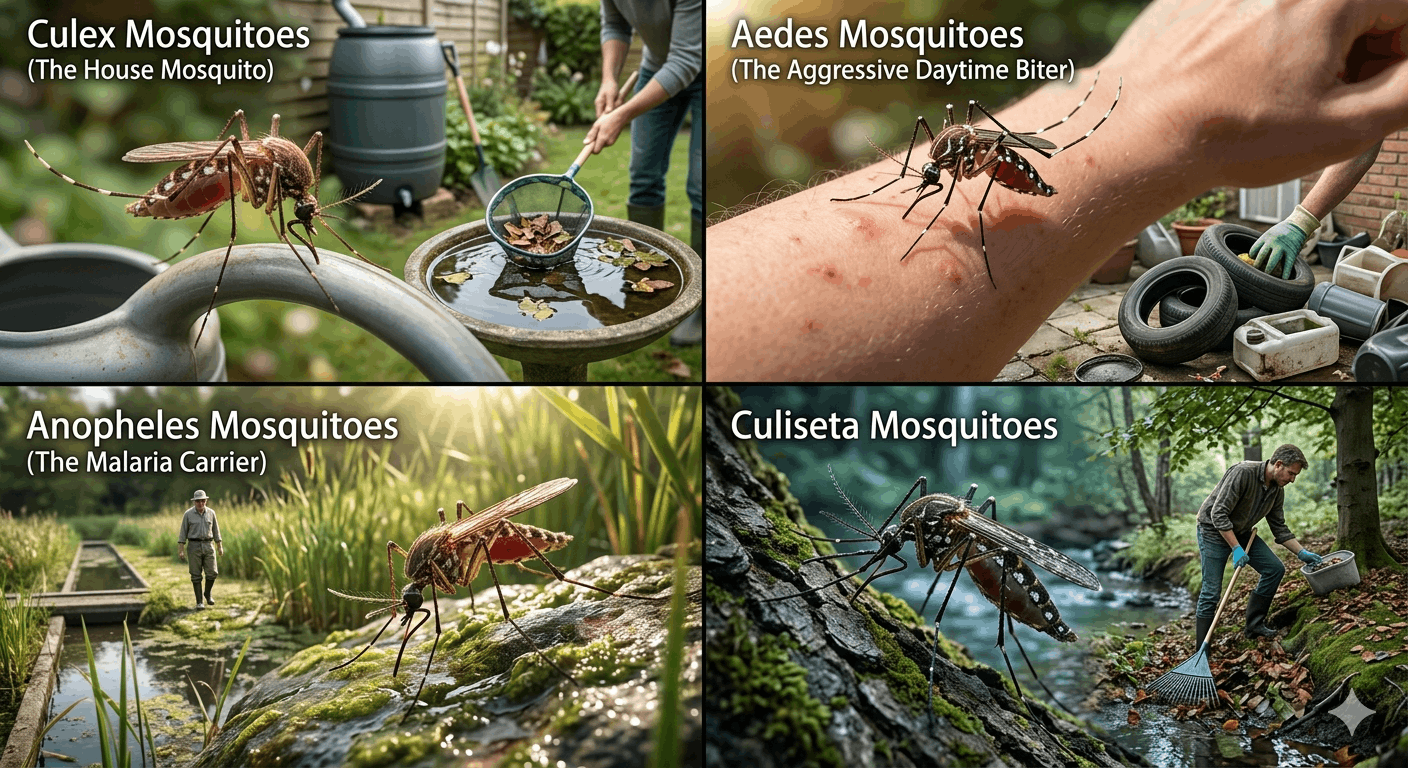
Most homeowners treat all mosquitoes the same way, but the reality is that different types of mosquitoes behave differently, breed in different places, and carry very different health risks. Some species bite during the day, others at night, and some do not bite at all. With around 100 mosquito-borne diseases affecting humans worldwide, the mosquito landing on your arm could be harmless or genuinely dangerous, and you would never know just by looking at it. If you have standing water, clogged gutters, or damp shaded areas around your home, you are likely hosting multiple species at once, which is exactly why a one-size-fits-all approach to mosquito control rarely works.
The Solution: Know Your Mosquito, Then Act Smart
Understanding the most common types of mosquitoes near Canadian homes helps you take the right steps to protect yourself. Here are the key species you need to know.
Culex Mosquitoes (The House Mosquito)
- Light brown with white stripes, commonly found near storm drains and birdbaths
- Females lay up to 400 eggs at a time in polluted standing water
- Culex pipiens and Culex tarsalis are responsible for most West Nile Virus infections in Canada
- Symptoms range from none at all to fever, headache, rash, and, in rare cases severe brain-related illness
Aedes Mosquitoes (The Aggressive Daytime Biter)
- Recognizable by their bold black and white markings and slender abdomen
- Bite during the day, most aggressively at dawn and dusk
- Carry dengue, Zika, and chikungunya
- The tiger mosquito has been reported in Ontario’s Windsor-Essex region since 2018 and is spreading northward
Anopheles Mosquitoes (The Malaria Carrier)
- Associated with malaria transmission and bites between dusk and dawn
- Malaria is not currently endemic to Canada, but imported cases do cause occasional local outbreaks
- Knowing their nighttime activity pattern helps you identify which species is targeting you
Culiseta Mosquitoes
- Less well-known but still capable of spreading disease to humans
- Culiseta melanura primarily targets birds and spreads Eastern Equine Encephalitis
- Other Culiseta species do bite humans and can carry the Jamestown Canyon virus
Real Examples: What Happens When These Mosquitoes Get Out of Control
The risks from different types of mosquitoes are not just theoretical. Canadian health records confirm the real-world impact.
West Nile Virus is the most common mosquito-borne disease in Canada, spread by mosquitoes of the Culex genus. Public health authorities report anywhere between 40 and 200 human cases each year, and in 2007, there were 2,400 confirmed cases across Canada during a particularly bad year for weather conditions and infected bird populations.
Mosquito-borne diseases in Canada have increased by 10 percent over the last 20 years, largely due to climate change, as warmer temperatures expand mosquito habitats and lengthen the breeding season.
The tiger mosquito story in Windsor-Essex is a warning sign for the rest of the country. This tropical species is a strong vector for diseases like the Zika virus and was first identified in Ontario in 2016. As summers get warmer and longer, more invasive species will push northward. Being proactive now is far better than scrambling for solutions later.
On a local level, homeowners who ignore standing water around their property are essentially building mosquito nurseries. A single neglected birdbath, an old tire, or clogged gutters can support thousands of mosquito eggs. This is where professional pest control becomes not just a comfort but a genuine health decision.
Extra Tips to Protect Your Home Right Now

Now that you understand the types of mosquitoes you may be dealing with, here is what you can do today to reduce your risk.
- Eliminate Standing Water
- This is the single most important step. Empty any container that holds water after rain including plant saucers, buckets, toys, and tarps. Mosquitoes only need a small amount of still water to breed.
- Check Your Gutters
- Blocked gutters are a top breeding site for Culex mosquitoes. Clean them out at the start of each season and keep them clear throughout summer.
- Use the Right Repellent
- Health Canada recommends repellents containing DEET, picaridin, or oil of lemon eucalyptus for effective mosquito protection. Apply it whenever you are outdoors during active mosquito hours.
- Dress to Protect
- Wearing permethrin-treated clothing and gear is a proven way to reduce your risk during peak mosquito transmission season, which runs from late spring to early fall.
- Seal Entry Points
- Keep window and door screens in good repair. Mosquitoes are small enough to enter through tiny gaps, and Culex species actually prefer to feed indoors during certain times of the year.
- Call a Professional
- If mosquitoes are consistently bad in your yard despite your best efforts, a licensed pest control company can identify breeding sites you may have missed and apply targeted treatments that are safe for your family and pets.
For more on how to protect your outdoor spaces, see our related guides on backyard pest prevention and seasonal pest control tips.
For the latest guidance on mosquito-borne illness in Canada, the Government of Canada’s mosquito surveillance page is an excellent and up-to-date resource.
Stop Guessing and Start Protecting: Take Action Today
Now you know that not every mosquito buzzing near your porch is the same. The types of mosquitoes in and around your home range from mildly annoying to genuinely dangerous. The key is to act before a mosquito problem becomes a health problem.
Start by eliminating standing water, checking your gutters, using the right repellent, and sealing gaps in your screens. These simple steps can make a real difference in reducing the mosquito population around your home. The earlier in the season you start, the better your results will be.
Do not wait for a bite to remind you that mosquitoes are more than just a summer nuisance. Take back your outdoor spaces, protect your family, and enjoy your yard without the constant swatting and worrying.
When home remedies are not enough, and the problem keeps coming back, it is time to call in the professionals. 4K Pest Control is here to help.
Frequently Asked Questions About Types of Mosquitoes
Q1. How many types of mosquitoes are there in Canada?
Canada is home to at least 82 known mosquito species spread across every province and territory. Most of them bite, but only a small number are capable of transmitting diseases that affect human health. The most medically significant genera are Culex, Aedes, Anopheles, and Culiseta.
Q2. Which type of mosquito spreads West Nile Virus in Canada?
West Nile Virus is primarily spread by Culex mosquitoes, particularly Culex pipiens and Culex tarsalis. These mosquitoes pick up the virus from infected birds and then transmit it to humans through a bite. They are most active during evening and nighttime hours.
Q3. Are tiger mosquitoes found in Canada?
Yes, tiger mosquitoes (Aedes albopictus) have been identified in Ontario’s Windsor-Essex region since 2016. They are a concern because they can carry dengue, Zika, and chikungunya. Warming temperatures are expected to allow them to spread further north in the coming years.
Q4. Do all female mosquitoes bite humans?
Not all female mosquitoes target humans specifically. Most will feed on any warm-blooded host available, including birds, deer, and rodents. Some species, like Culiseta melanura, prefer birds almost exclusively and rarely bite humans at all.
Q5. What time of day are mosquitoes most dangerous?
It depends on the species. Aedes mosquitoes are most active during the day, especially at dawn and dusk. Culex and Anopheles mosquitoes typically feed at night. This means you can be at risk from different species throughout the entire day.
Q6. Can mosquitoes survive Canadian winters?
Some species can. Certain mosquitoes enter a dormant state called diapause, similar to hibernation, and hide in places like sewers, basements, or hollow trees. Culex mosquitoes are known for overwintering indoors, which is why you may spot one buzzing around your home even in early spring.